Lithography
The unknown land is yourself.
The lithography program outlines its contours by posing the question: why imagine? Because without imagination, there is no intention, and without intention, no creation. Without creation, there is no meaning.
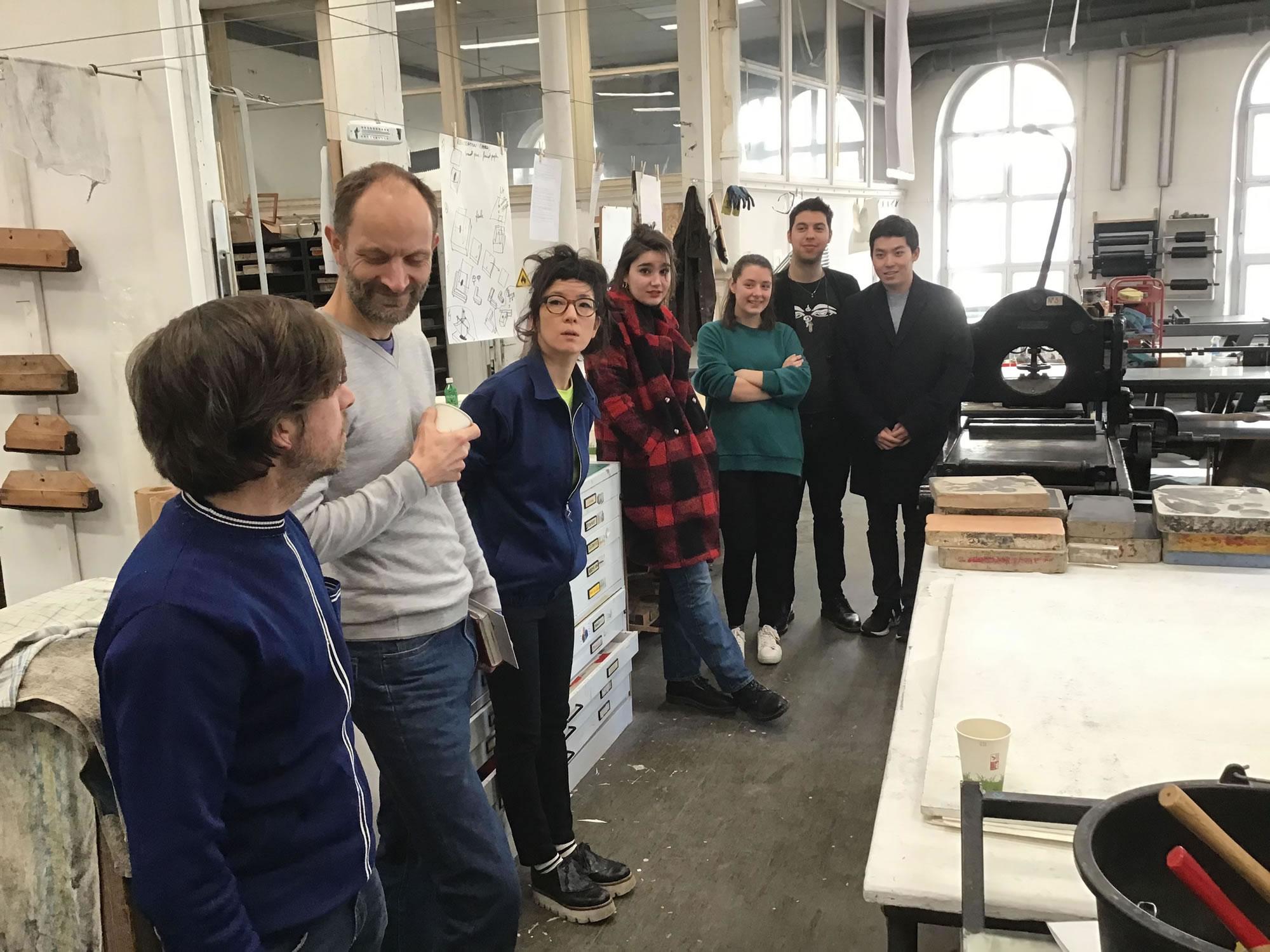
The lithography program, part of a whole (the school, society, the world), is a place of deepening and openness where the creation of images through lithographic processes is taken as a starting point or as a step toward learning a craft — that of the creator — where a profound questioning of being combines with the joy and necessity of making, where the question of what meets the question of how. Nothing is given, everything is to be discovered; this is the observation that drives the search for authenticity. You will join this dynamic, keeping in mind that you are not here by chance, on this path you have chosen.
We will present you with obstacles, challenges, which will allow you, through study, experimentation, and practice, to better perceive your relationship to the world through the difficult question: What is art? Is it what escapes all definitions? Is it our portrait? Is it becoming more aware of what prevents us from being?
Learning drawing and the creation of printed images involves constraints (a system of black-and-white visual references, color layering, etc.) and efforts (physical work, editing, starting over...) that constantly compel the mind to question gestures, to refine them, and to understand the logic that links intention, result, and process. By passing through this forest, you will gradually develop your vision and ideas, which will allow you to express your technique. You will develop your own means of expression.
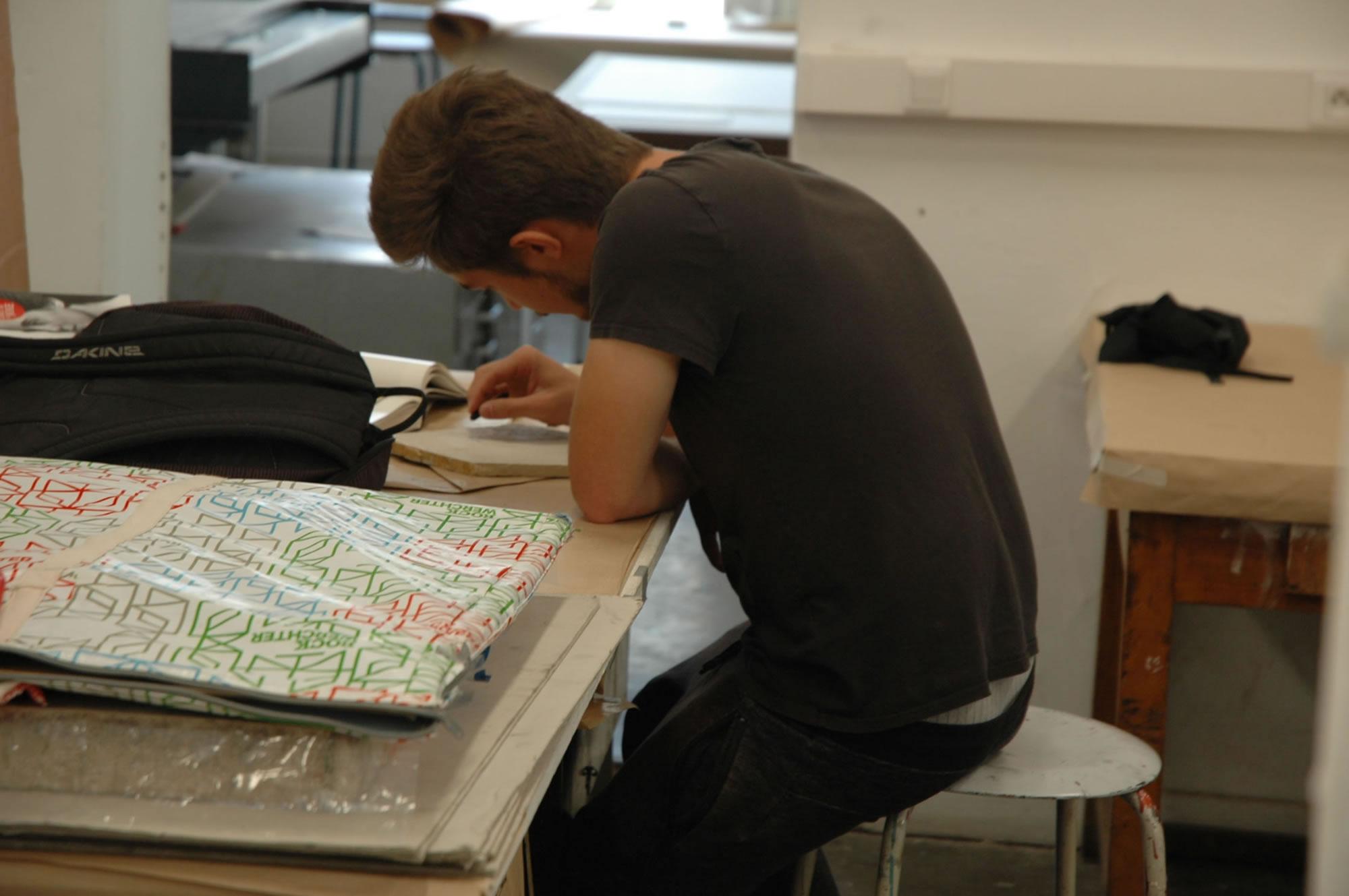
The workshop is a base camp for the students in the program. It is a relay for other students. It is a place of a subtle balance of quietude, where the path of ideas can follow the cracks, and of teachings whose goal is not to reassure but to surprise by revealing new horizons. It is a deceptive refuge which, under the pretext of allowing the synthesis of knowledge and experience, is in fact, by questioning the perspective on practice, an incitement to the quest for what is missing, what follows.
Bachelor’s Degree – 180 credits
During the first cycle of study, the focus is on the interaction between learning creative processes and the intellectual context. By the end of the cycle, the student works with a wide variety of techniques and outcomes, both in processes and content.
The program offers an introduction to the principles of basic printing forms within the synergy of the printmaking department: relief printing, intaglio, planographic printing, and stencil techniques (engraving, lithography, screen printing, typography, etc.).
The resulting cross-fertilization initiates an opening toward transdisciplinary practices that the student can integrate into their personal projects or use as a means to understand the complexity of practices and ideas.
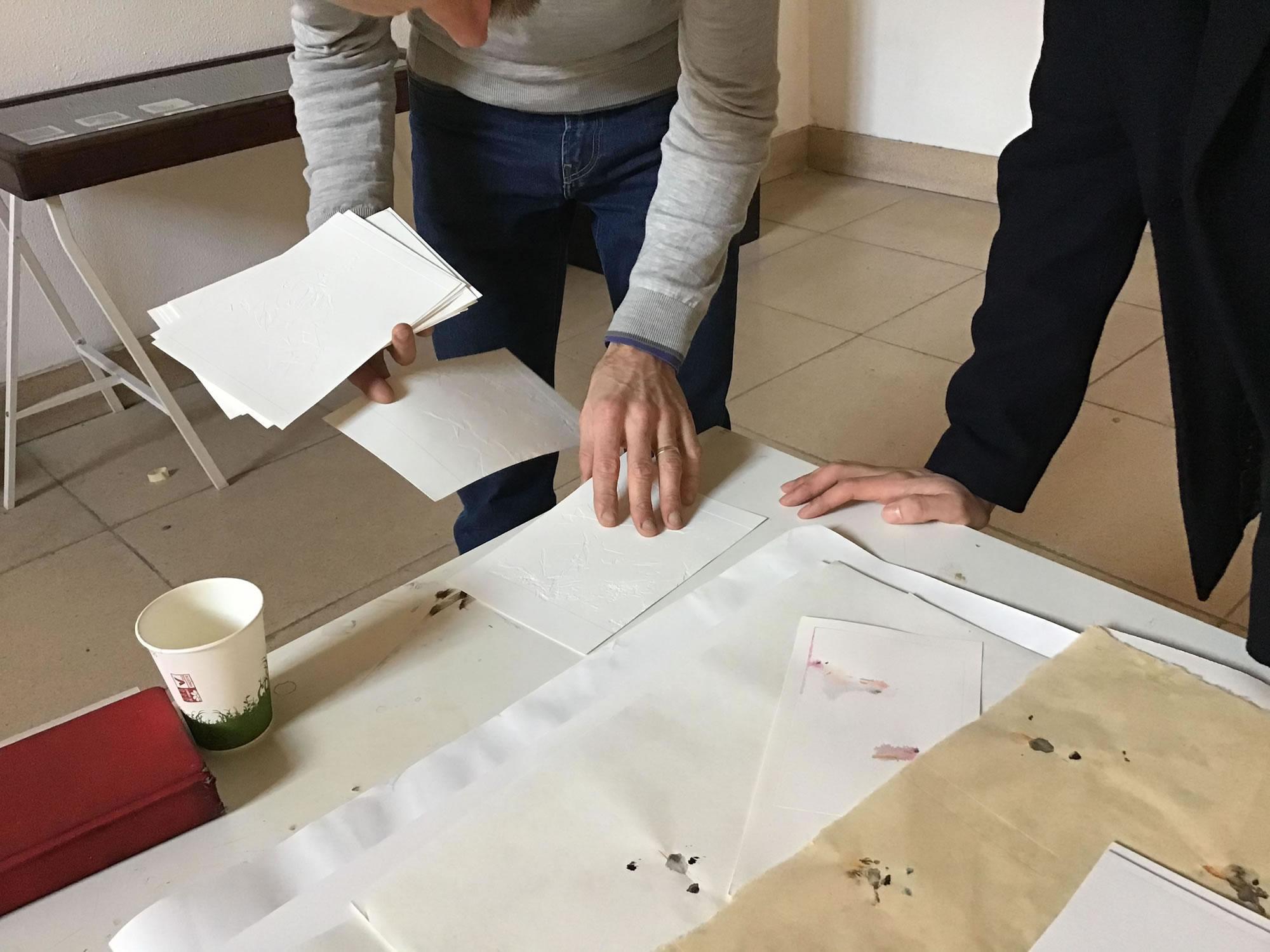
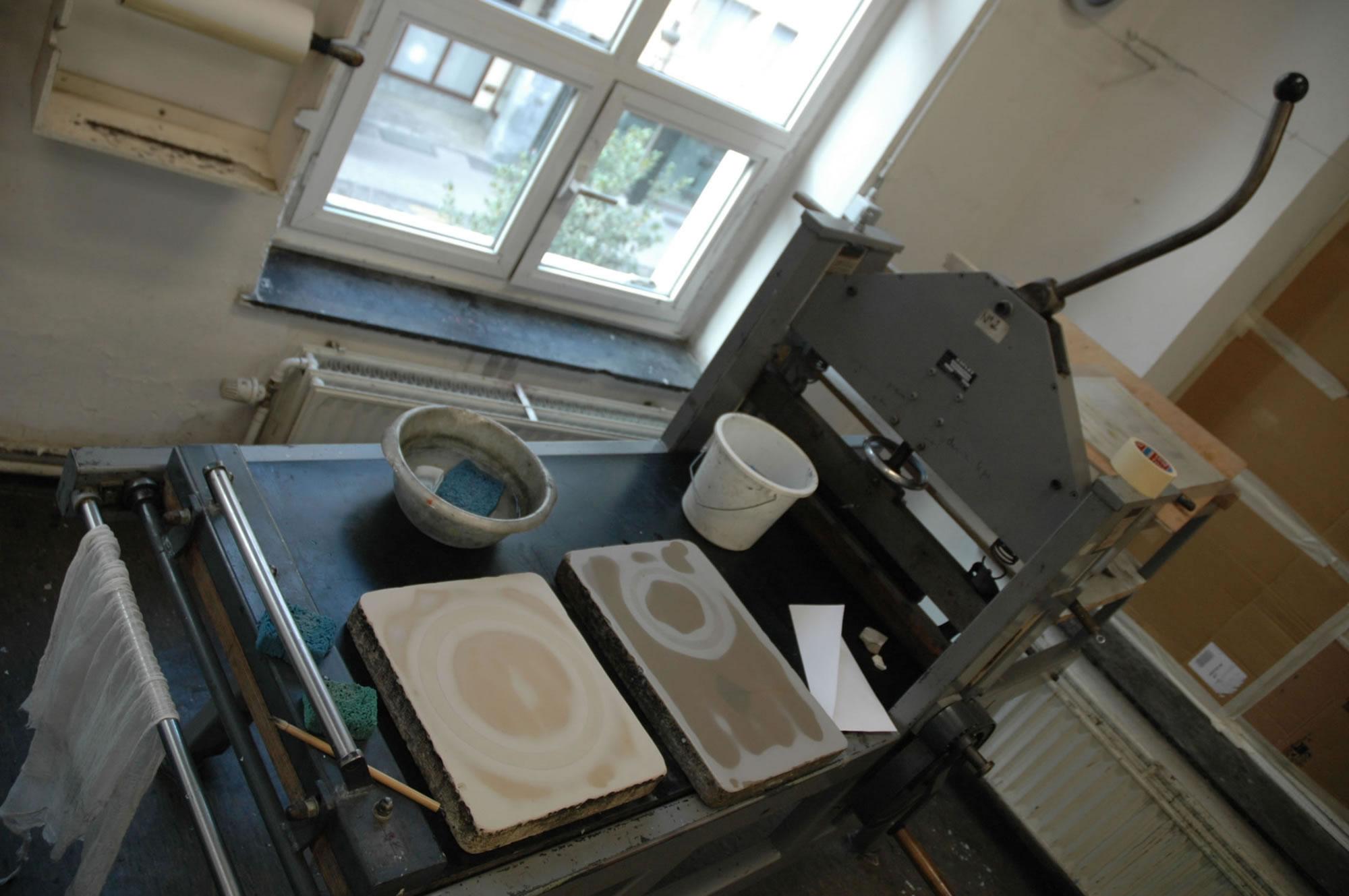
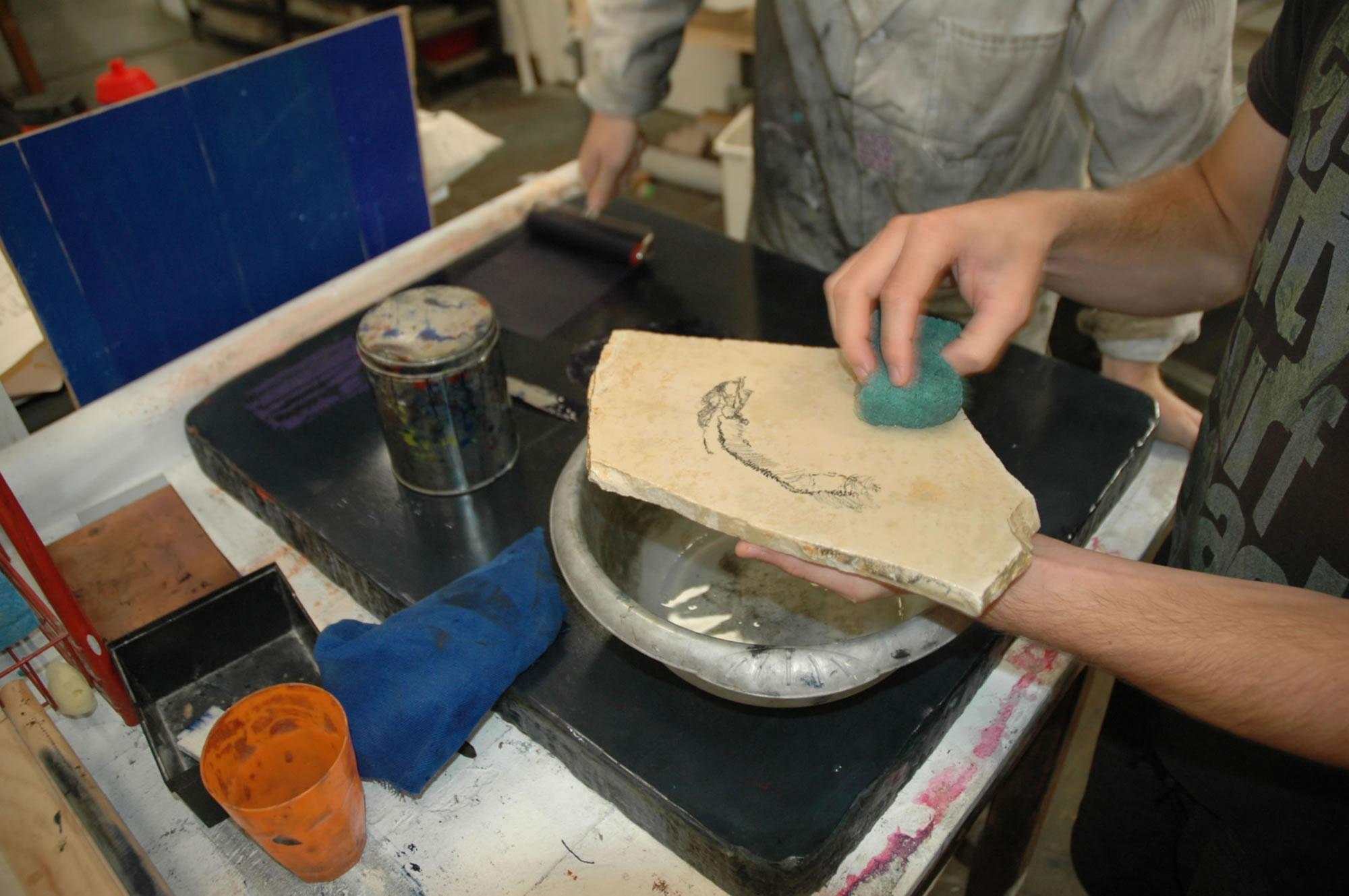
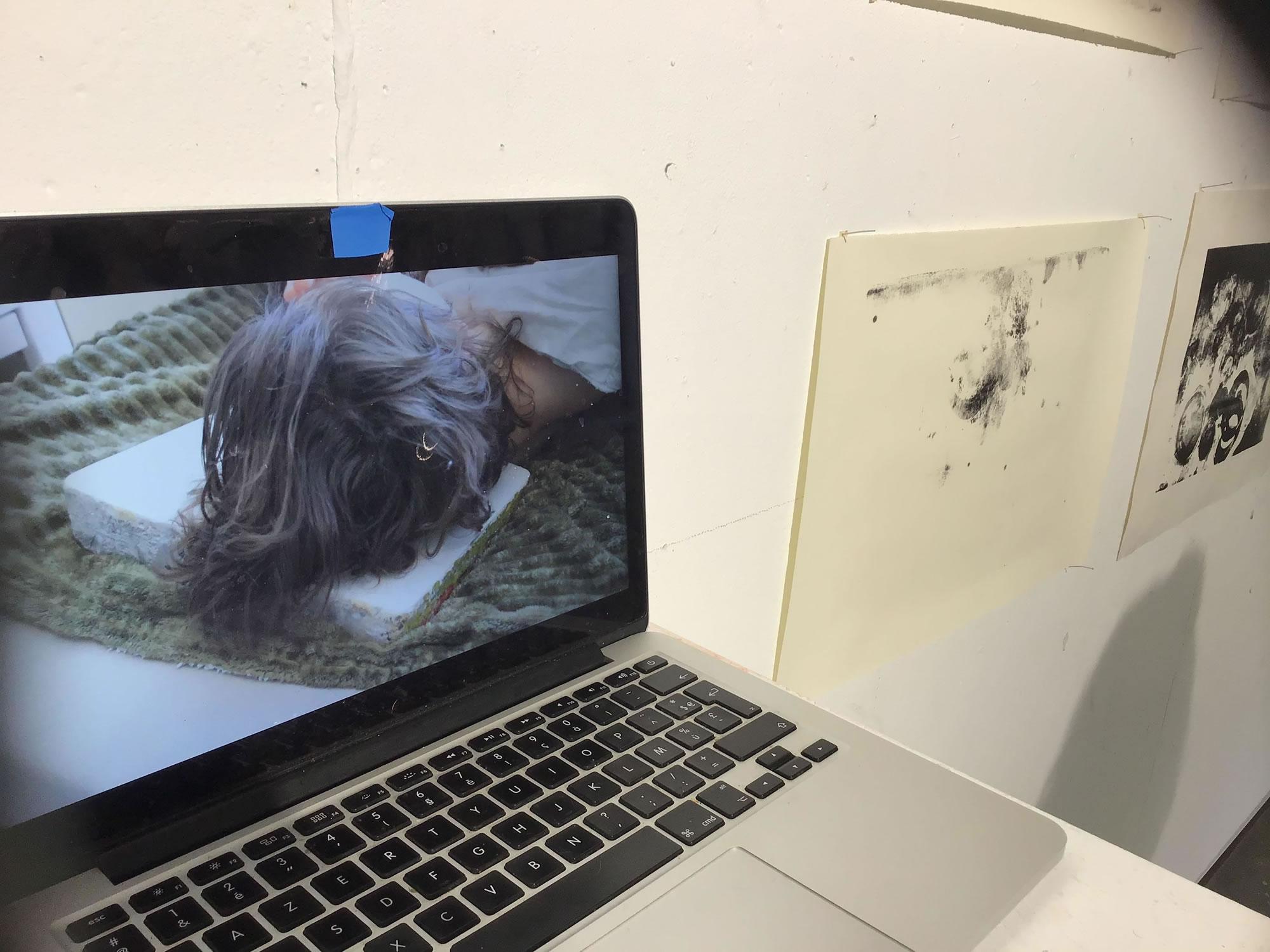
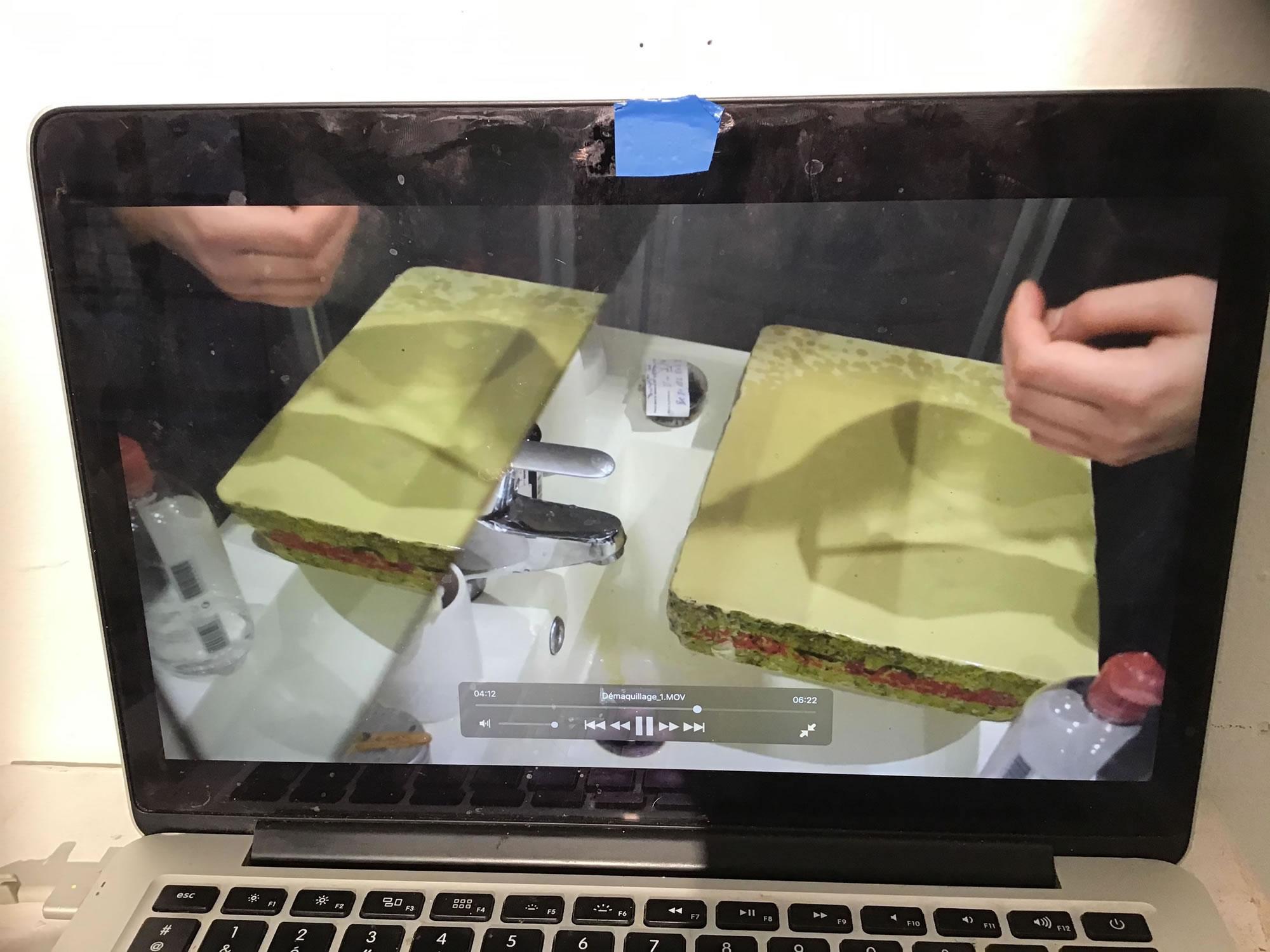
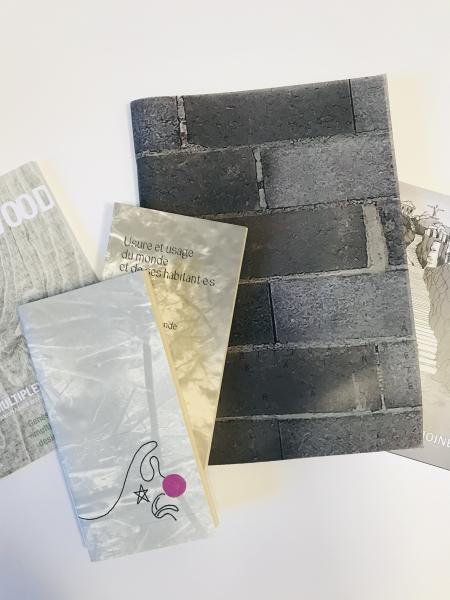
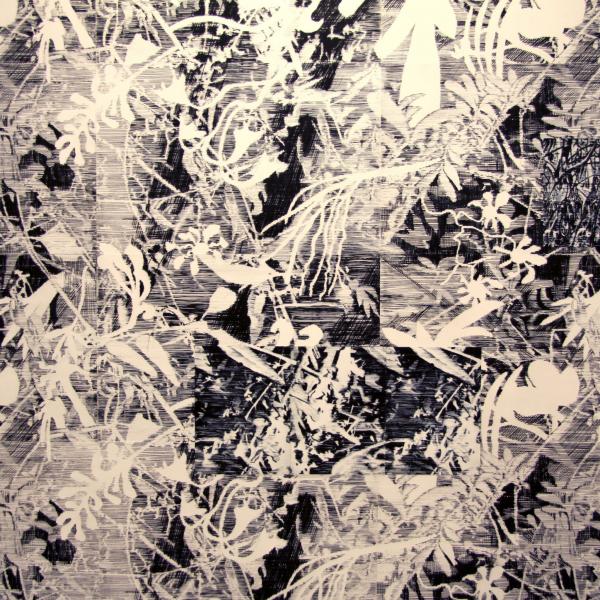
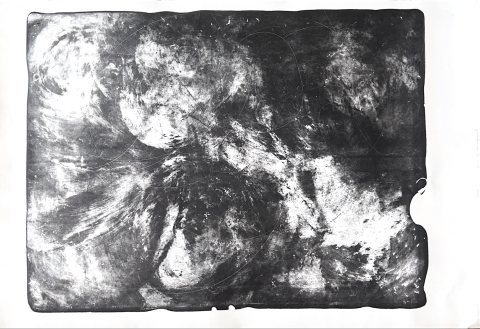
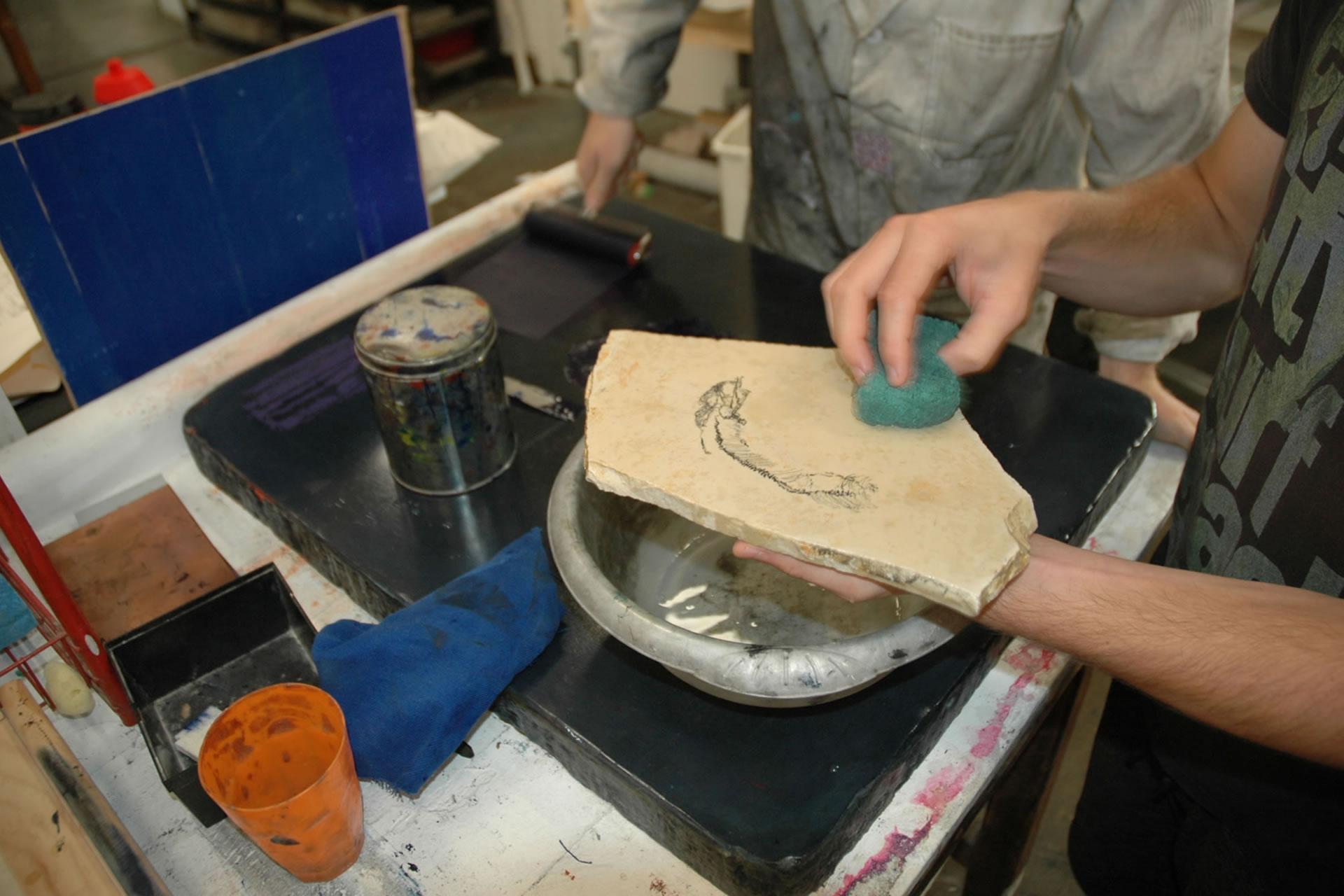
More specifically, through stone lithography, the program addresses questions of the materiality of the image, the gesture to the image, and the image to the gesture. The lithography curriculum is open to narrative structures, artist book design, collaborative and editorial practices.
Master’s Degree – 120 credits
“To do something, you have to do more than what you can do. To decide, you have to go through the impossibility of decision.” — Jacques Derrida
In the second cycle, the student continues to surpass themselves. They will be asked to make full use of the school’s teachings and facilities, as well as continue broadening their general culture by keeping up with cultural life. Along the way, in the practice of printed images, artist book design, or any discipline they choose to associate within the lithography curriculum context, they will be asked to formulate their ambitions, interests, and turn them into a personal project or a related attitude.
In the dialogue with themselves, teachers, and other contributors, the student develops interpretative skills that allow them to make conscious choices. They are supported in their finalization and presentation efforts. The right to make mistakes is essential.
The lithography curriculum follows the logic that after studies, the graduate will engage in various activities alongside their artistic practice, such as teaching, editorial work, and cultural organization, which is taken into account in the program’s design.
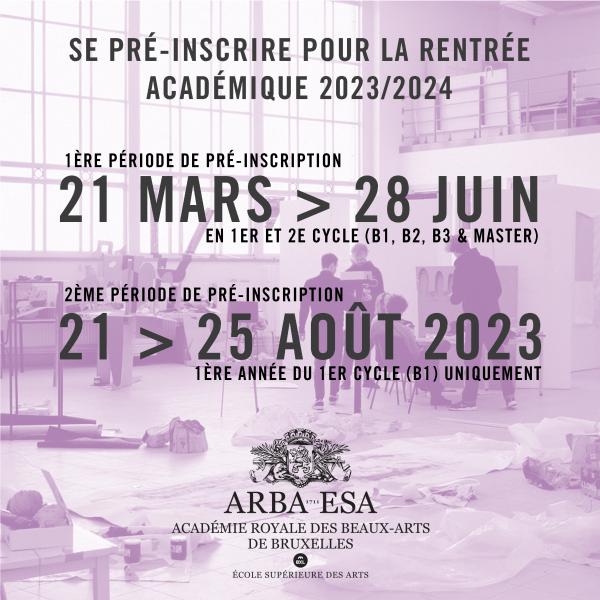
PRE-REGISTRATION:
All admission applications must be submitted via the admissions portal. The website allows you to apply and upload all the necessary documents for your pre-registration.
Entry into the First Year of the First Cycle (B1)
Admission into the first year of the Bachelor's program is subject to passing an entrance examination.
The exam consists of three parts: a practical test, a research-based test, and a motivation interview during which the candidate may present a portfolio of works.
The exam is open to all applicants; no prior artistic training is required.
Entry During the Bachelor’s Program (B2 and B3)
Admission into the second or third year of the Bachelor's program at ArBA-EsA is based on an artistic portfolio.
For selected candidates, an interview and/or practical test is organized and coordinated directly by the program coordinator.
Entry into the Second Cycle (Master's Program)
Admission into the Master's program is based on an artistic portfolio.
For selected candidates, an interview is organized and coordinated by the program coordinator.
➤ Plus d'informations sur les épreuves d'admission en Lithographie
Professeur titulaire : Cyril Bihain
Conférencièr·e : Yonghi Yim
Contact : lithographie@arba-esa.be
- Workshop de fabrication de papier et de filigranes avec Andrea Mieke (DE) en collaboration avec la Academie Beeldende Kunsten Anderlecht.
- Workshop de photographie argentique (pinhole camera) et de cyanotypie avec Rosemary Laneau.
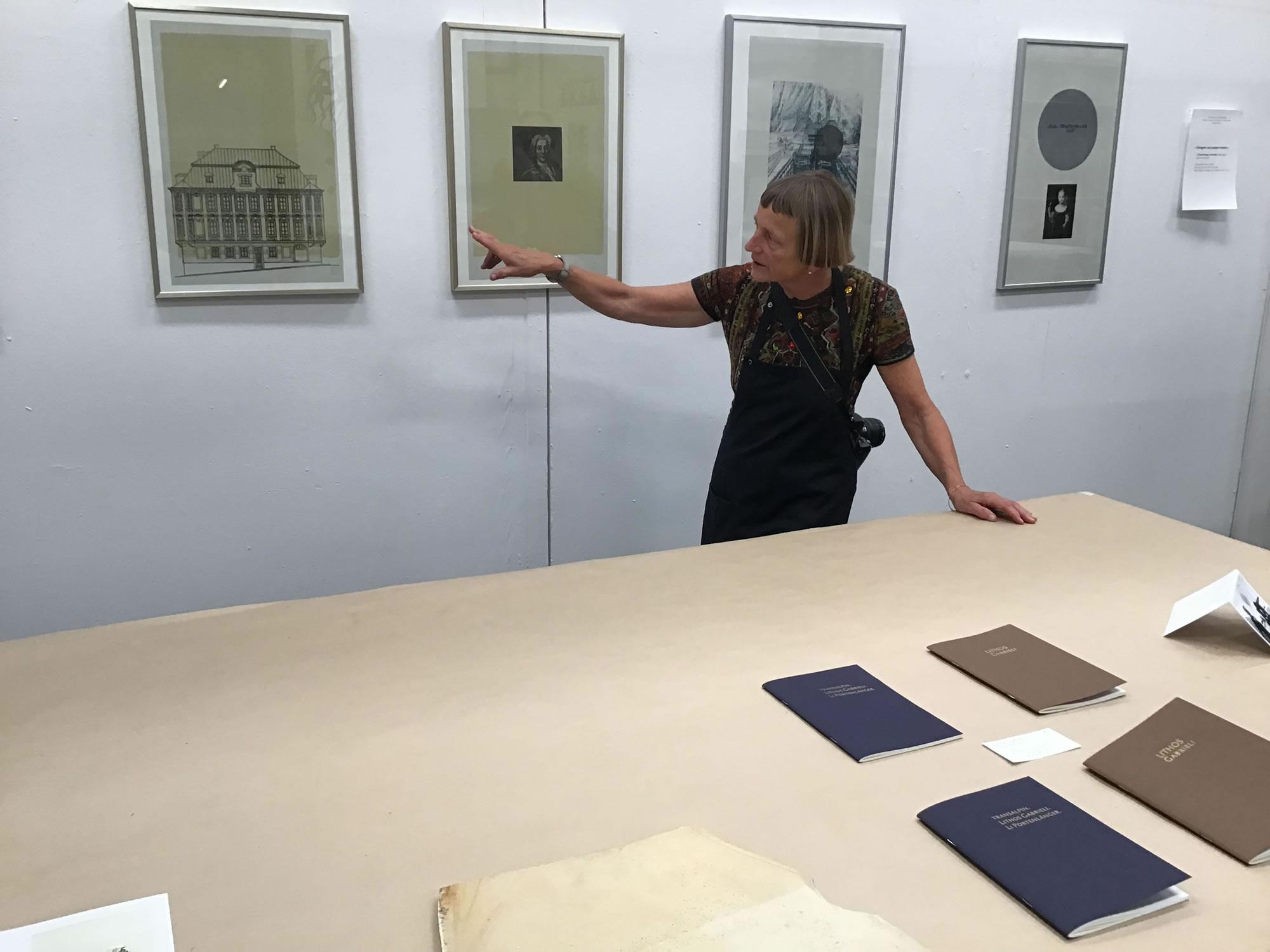
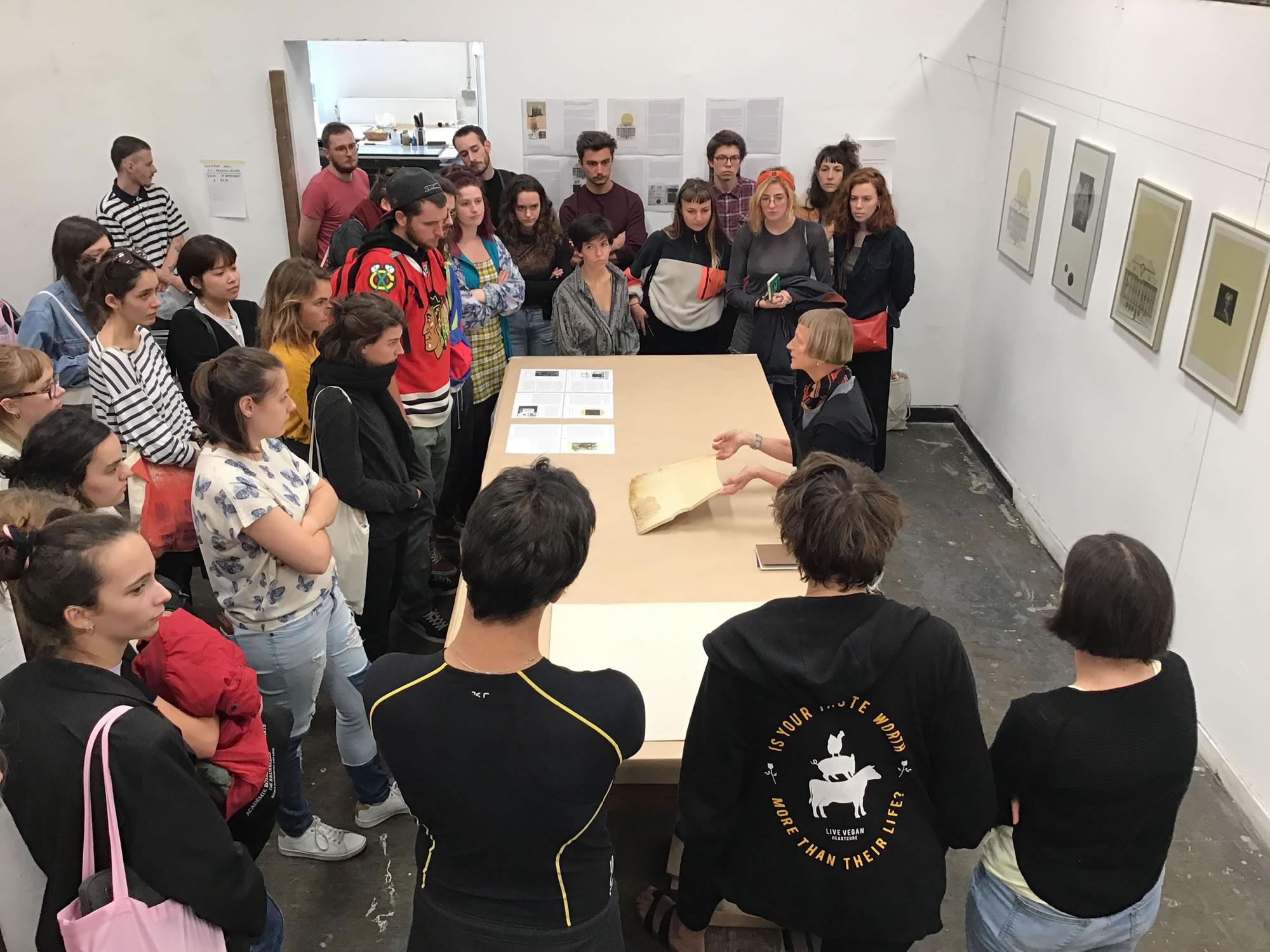
- Collaboration avec la Lithographie Werkwtatt de Eichstätt. Exposition et workshop de, et avec Li Portenlänger (DE), pendant les journées du patrimoine.
- Collaboration avec des artistes en résidence dans l’atelier de lithographie : Rafael Rodriguez, Filip Berte, Xiaopeng zhou...
- collaborations régulières transdiciplinaires avec les cursus gravure et sérigraphie de l’Arba-Esa.