Master in Urban Design / SITU
Master combining art, design, landscape, and human sciences, designed to train future artist-designers with a deep understanding of contemporary urban issues and who wish to direct their work towards environmental, social, and cultural practices.
Who is it for?
SITU is an interdisciplinary master’s program aimed at motivated and autonomous students from diverse backgrounds (mainly art, design, architecture, landscape, but also geography, sociology, or human sciences) whose work demonstrates a strong interest in the transformation of territories. The degree awarded is a Master’s in Plastic, Visual, and Spatial Arts with a specialized, advanced, or didactic focus on “urban design.”
What is it for?
Urban Design is a discipline that goes beyond mere planning. It involves rethinking our relationship to space, urbanity, and landscapes by integrating sustainable practices that respect the environment and its inhabitants, both human and non-human. As an urban designer, you can work in various fields: creating artistic proposals rooted in territory, cultural urbanism, territorial design, social design, and much more.
How?
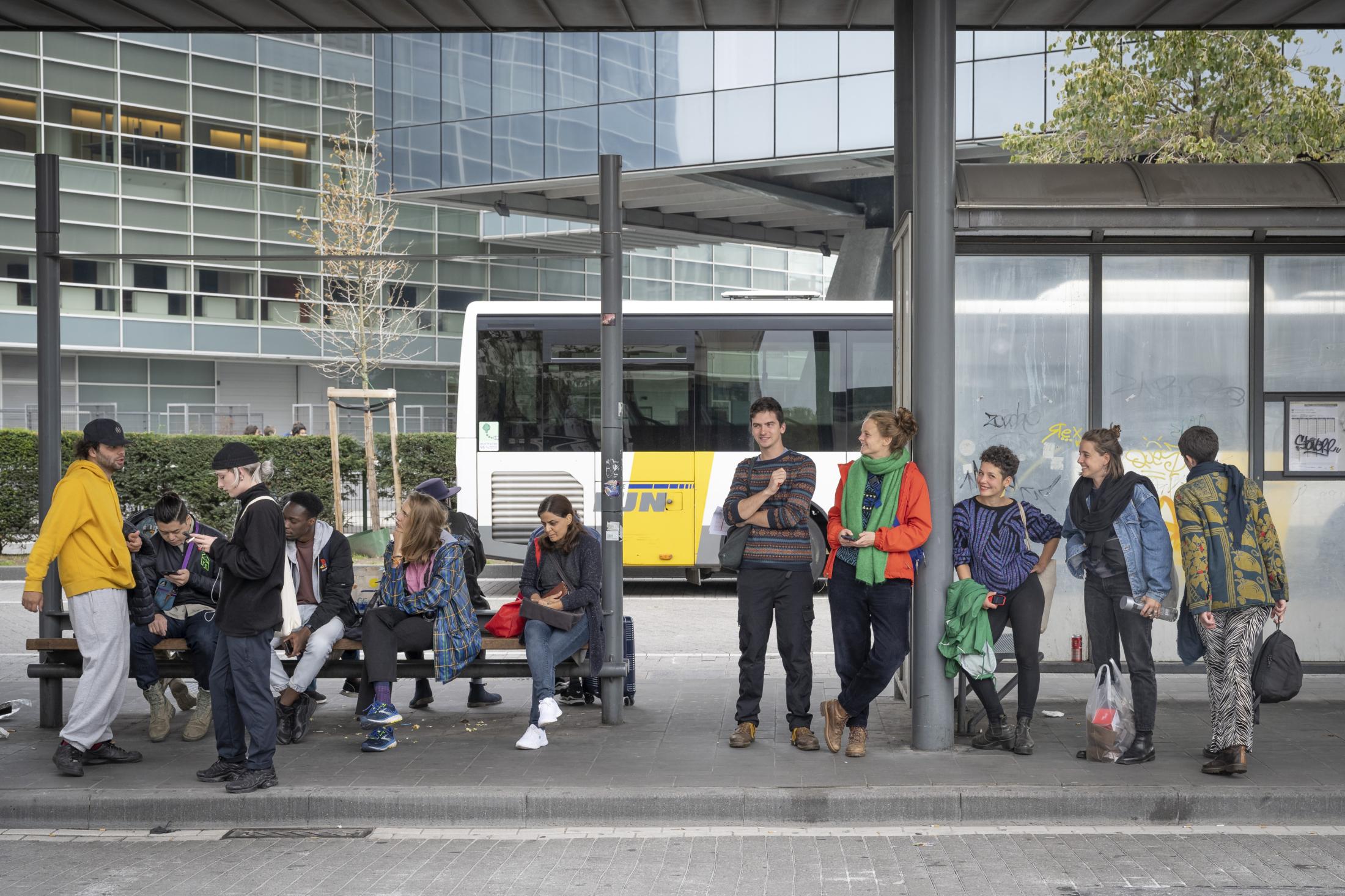
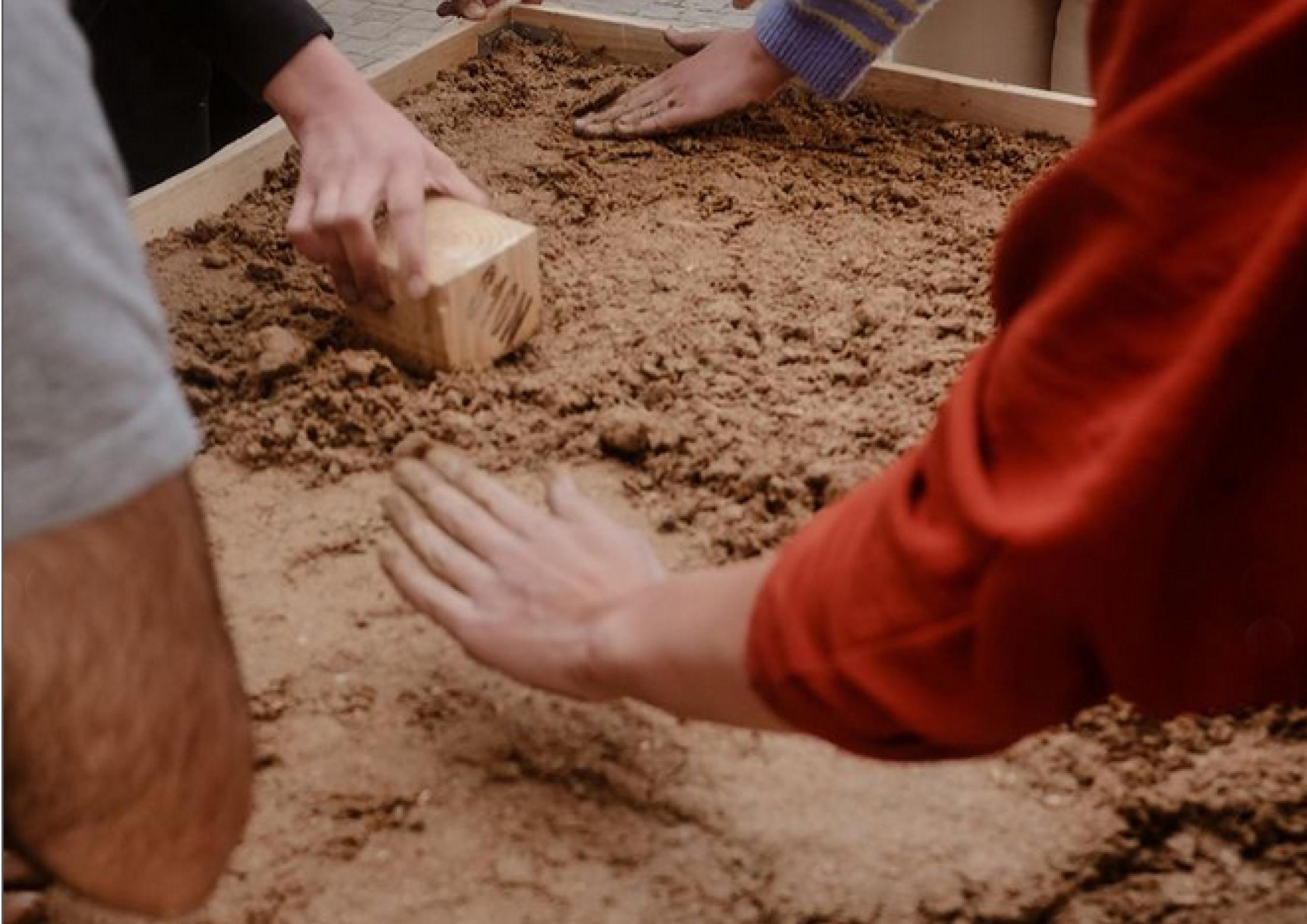
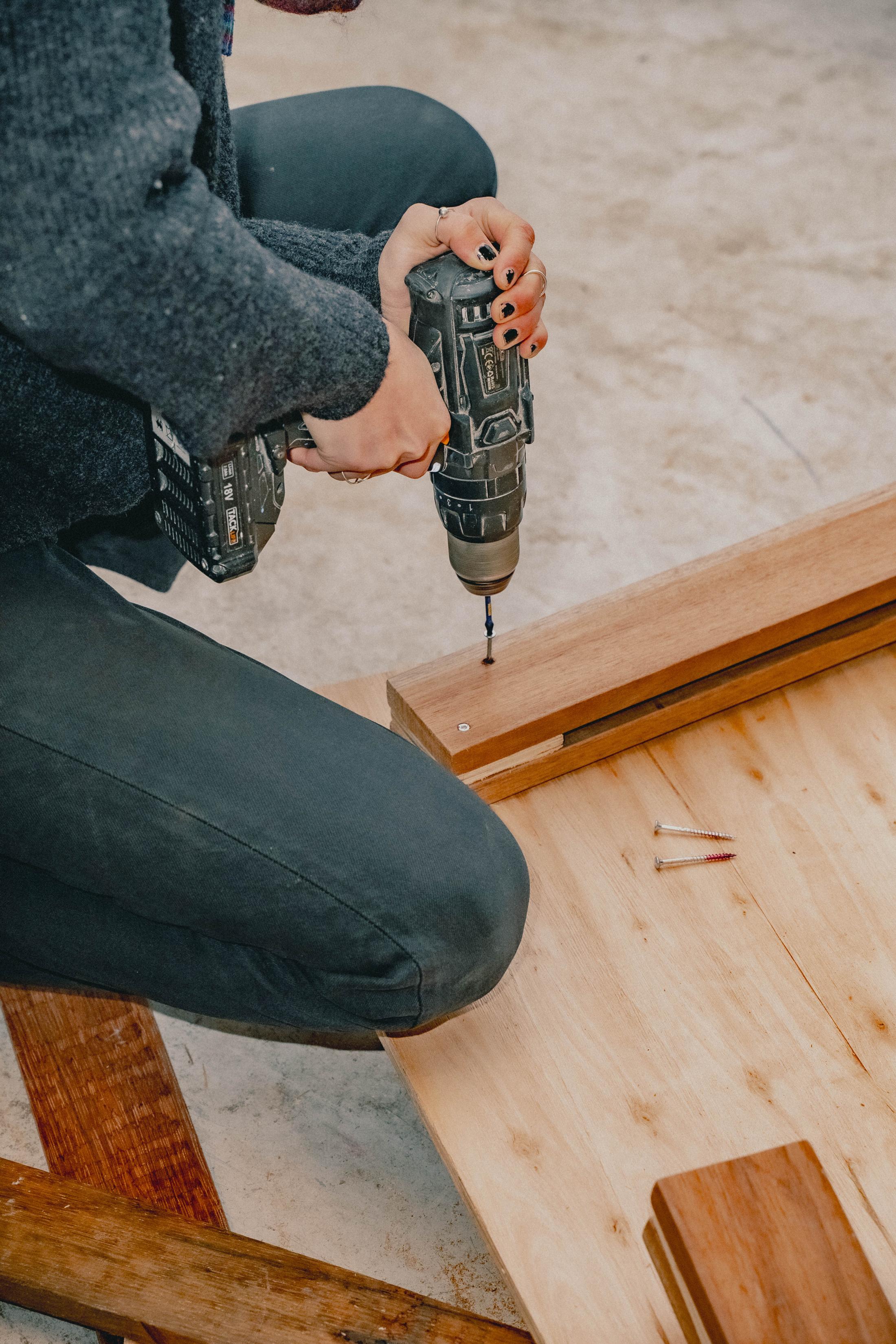
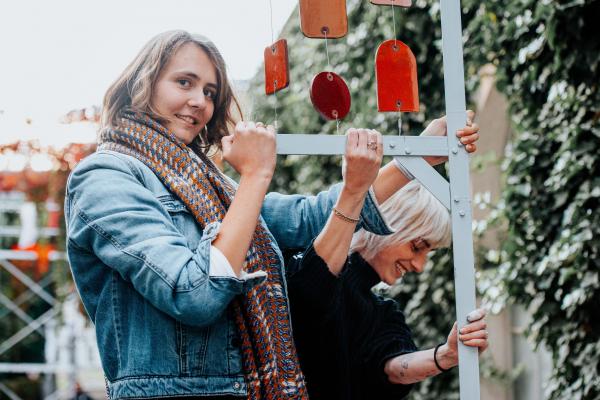
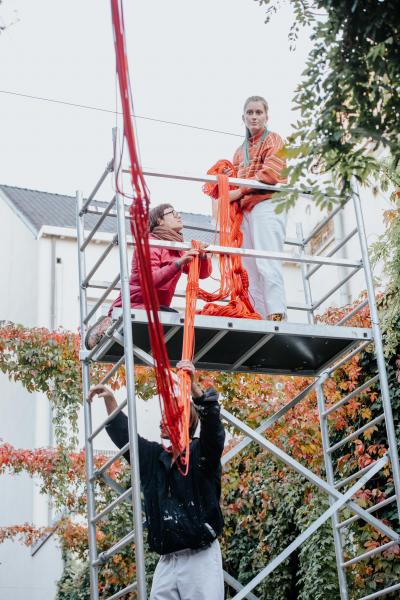
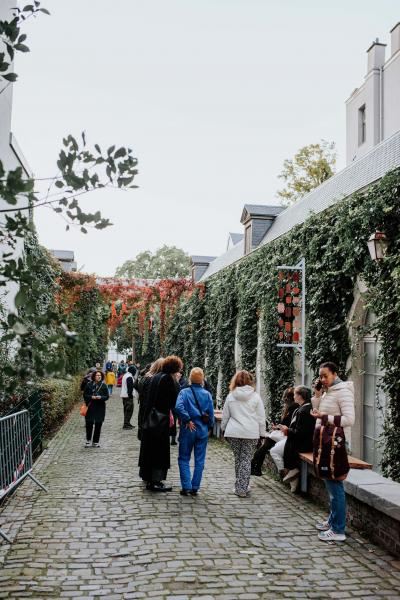
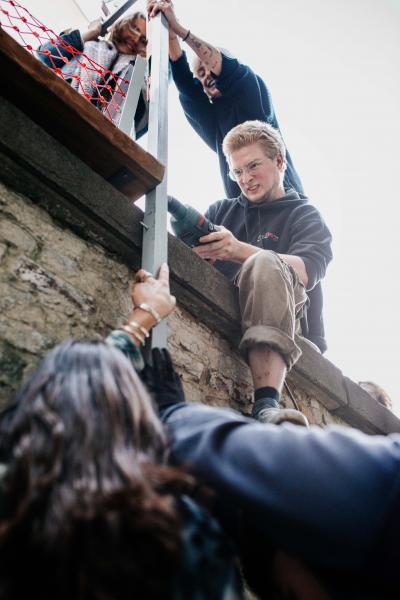
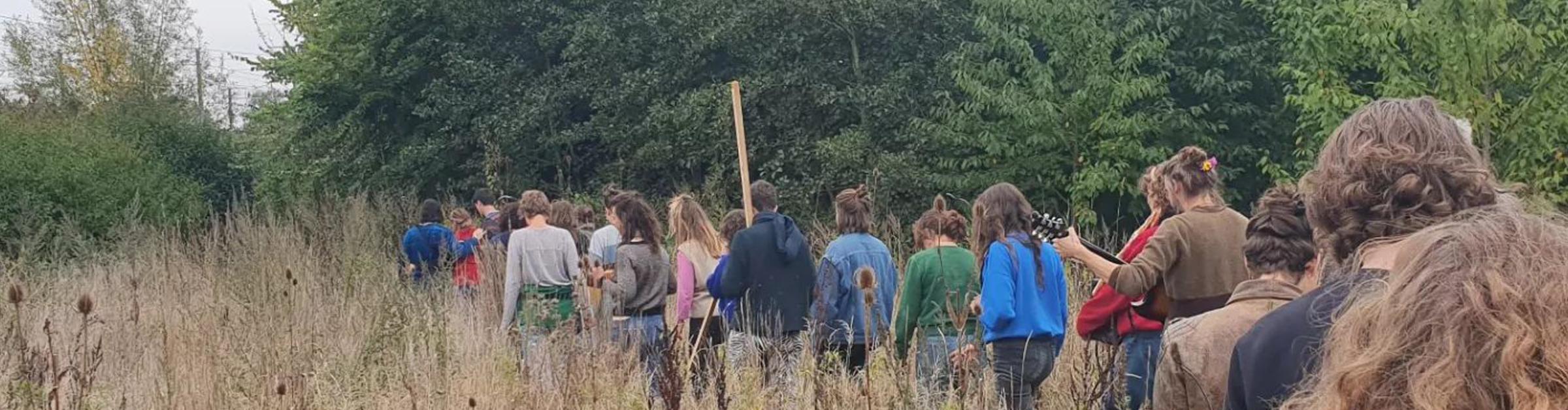
The program is practice-based—a pedagogy by doing—and radically questions the scope of contemporary urbanity. It encourages students to deeply rethink traditional disciplinary boundaries by emphasizing transdisciplinarity, collective dynamics, and constant openness and attention to others: interlocutors, artists, space, environment, users.
It favors horizontal learning, collaborative practices, collective research, as well as artistic and pedagogical experimentation.
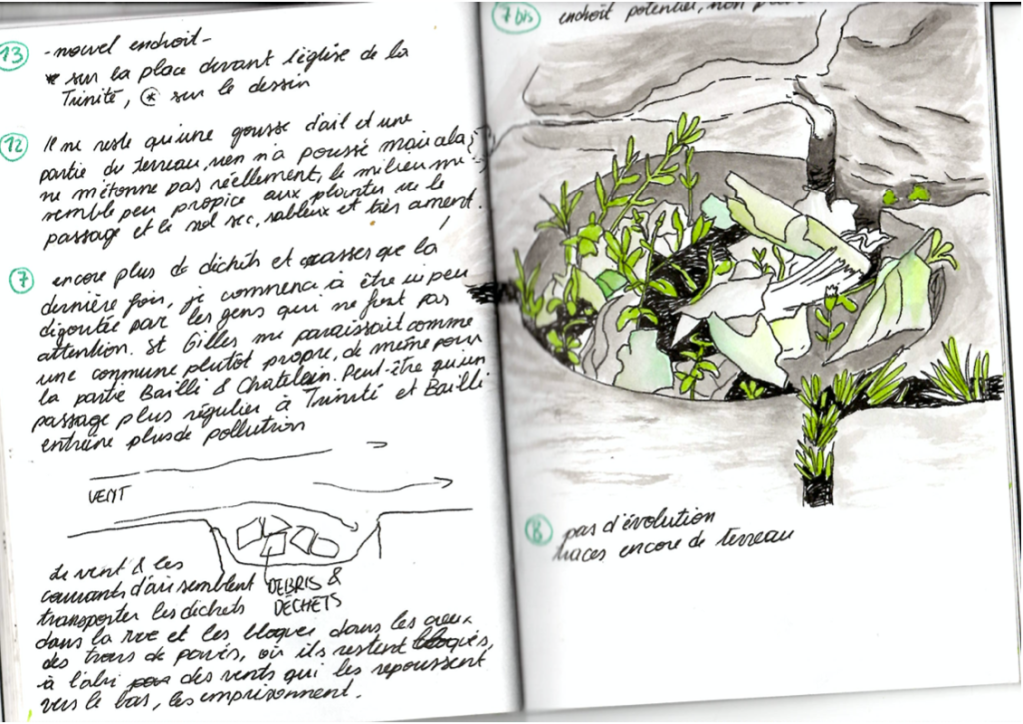
Starting from the premise that design is an attitude—drawing inspiration from the work of artist László Moholy-Nagy—students gain a solid understanding of the economic, political, social, environmental, and physical issues influencing territorial transformations. Through immersion in a context, SITU students develop artistic intervention proposals that are attentive and responsive to the challenges of that context.
At the heart of this “learning by doing” pedagogy is the students’ engagement and motivation to build their own attitude towards art and design practice and territorial issues. Whatever the method or chosen practice, in the SITU studio, students learn, try, fail, restart, meet, create, do, undo, and redo… to better bounce back.
Learning through trial—error—trial, rooted in a territory, aims to give meaning rather than impose fixed knowledge: it is about understanding why a concept, notion, tool, technique, or way of doing things is important to know for composing a space.
By defining our spaces as ecologies of relations, the SITU program proposes studying the performativity of artifacts (artistic, industrial, or architectural), narratives (visual and material), and practices that represent our realities within the post-industrial socio-economic context and current environmental crisis. Projects undertaken in SITU seek to produce spaces as processes that go beyond modern dualisms like nature/culture, reality/fiction, city/countryside, in order to rethink hybrid relations between the living and non-living, past, present, and future.
The master’s program integrates research and an action-oriented approach, encouraging critical praxis through prospective immersion, collective fiction, strategic proposal, and plastic exploration of techniques and materials.
It offers a program of meetings, visits, workshops, and seminars that nurture studio practice from idea to realization of an in-situ artistic proposal. Throughout the curriculum, students are encouraged to meet and exchange with actors in contemporary art and design and professionals in architecture, urbanism, and landscape.
What are the prospects?
SITU aims to open new horizons and paths of practice that students will define themselves at the end of their studies, as they become autonomous and active agents in current socio-economic contexts: creators of in-situ artistic projects, artists engaged in scale-1 practice, artists developing situated practices, space artist-designers, object artist-designers, public policy artist-designers, social artist-designers, creators of cultural projects in public space, facilitators of cultural projects in public space, facilitators in citizen participation, artists engaged in research and artistic teaching, and much more.
The goal is not to freeze students into a professionalizing track but to train future artist-designers with a deep understanding of contemporary urban issues—environmental, social, economic, and political—who want to orient their work toward environmental, social, and cultural practices.
Practice horizons:
- In-situ artistic projects
- Artistic practices in urban space at scale 1
- Situated artistic practices
- Cultural urbanism
- Territorial design
- Social design
- Facilitation of citizen participation
- Assistance to user management
- Art and design collectives
- Design, architecture, urbanism, and landscape agencies
- Artistic research and teaching
- Public action foresight
- Public administrations linked to urban development
- Non-profit sector
- & much more
Linking M1 – M2
The first year of the master’s program is about exploration; the second year focuses on the diploma project.
In the first year, students practice complementary postures of the urban designer and develop a series of proposals to foster the emergence of a unique attitude and practice through experiences of individual or collective work, in situ or in the studio: how to analyze a territory, how to understand its challenges beyond prejudices, how to respond to a context, situation, or assignment, how to put tools into practice, how to engage with others’ work, and more.
By the end of the first year, the beginnings of the diploma project start to take shape.
In the second year, the student’s attitude and practice become clearer (their positioning, research fields), along with a specific diploma project. At the start of the year, each student presents the urban context or territory in which they wish to address their diploma project. Several presentation moments follow, serving as a “red thread” throughout the year.
Students are encouraged to experiment with different formats and define what moves them—their attitude, and the forms of existence of their practice.
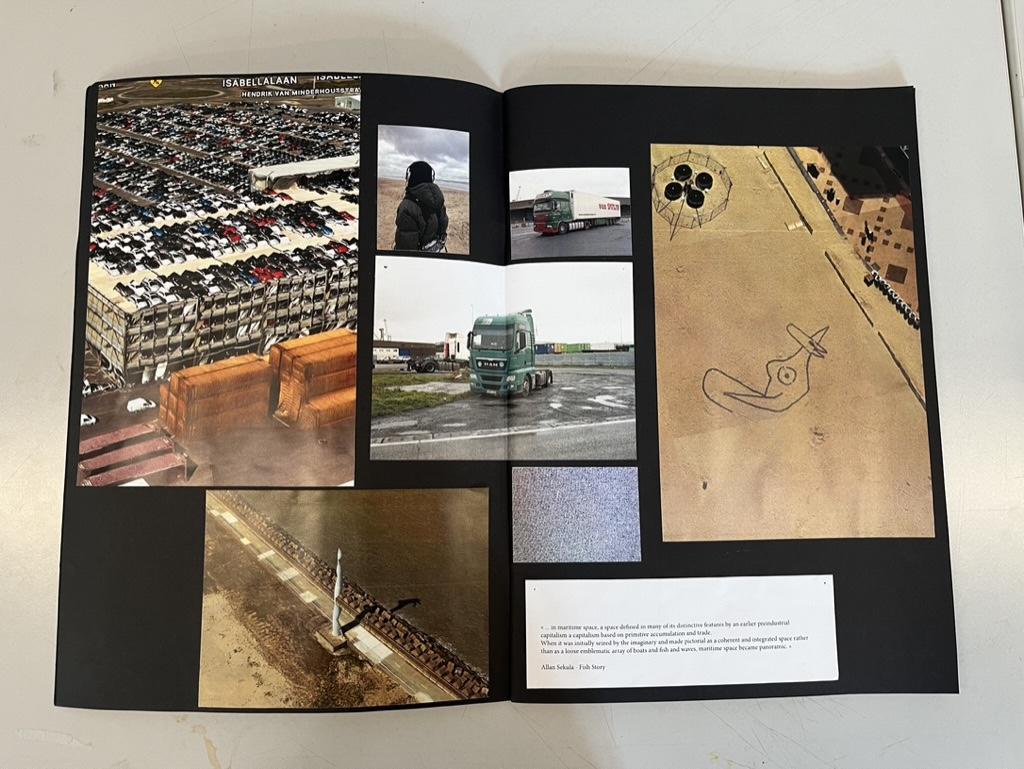
A portfolio is expected.
In parallel with the diploma project, students work on their final thesis, considered outside the studio’s scope but equally important.
Pedagogy and Study Program
Projects developed over the two years in SITU revolve around two main practice axes:
- An individual work axis, allowing the student to formulate and assert an attitude (thus a critical posture and societal positioning as an artist-designer confronting a problem they define) and to build their toolbox.
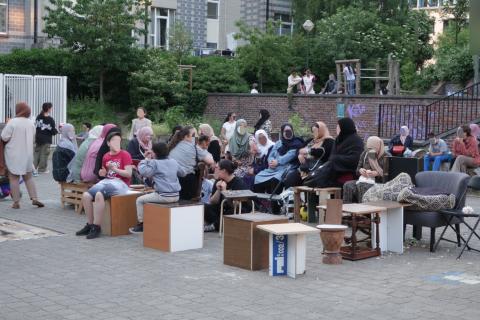
- A collective work axis: artistic proposals rooted in territory are rarely realized alone. The studio is thus also a place where the entire team—M1 and M2 students, teachers, lecturers, guests—works together to share practices, tools, questions, and ways of doing things.
The study program consists of:
SITU STUDIO: an experimentation and research space composed of several modules:
- The weekly laboratory (LABO) – Urban Design and Environmental Design – held Tuesdays and Thursdays, where collective and personal projects are developed in a collaborative dynamic.
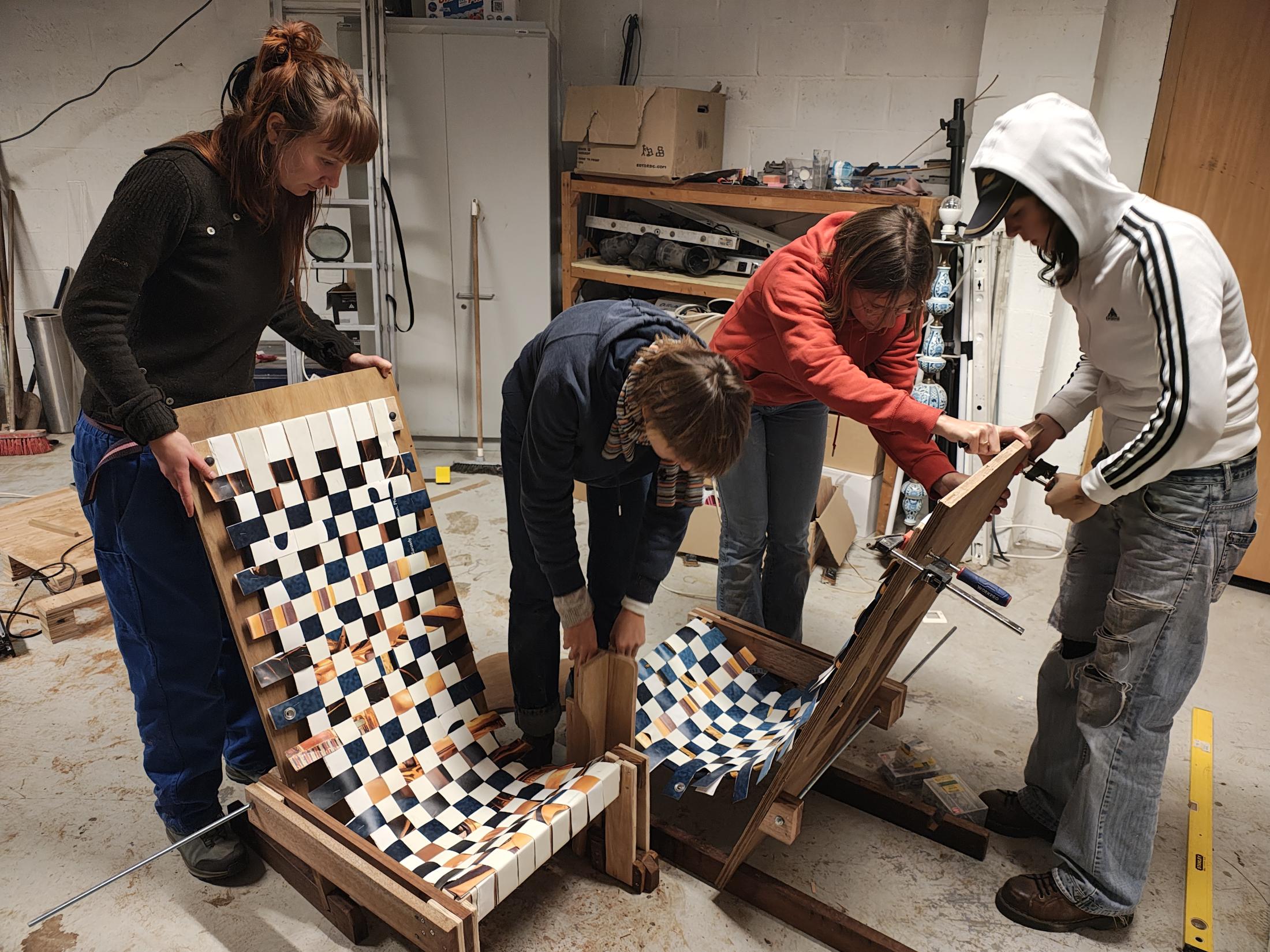
- Urban Practice Workshops (APU) – collective workshops that allow experimenting with specific ways of practicing art, design, and territory.
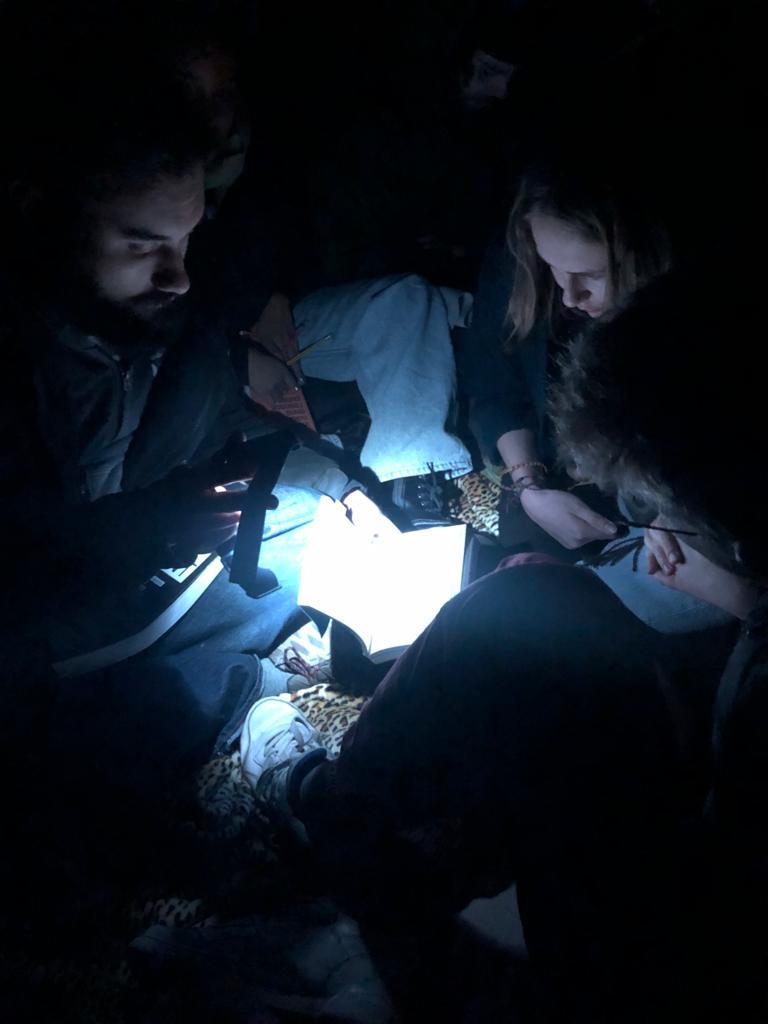
- Critical Lunches (DC) – collective moments where cooking, food, the table, and sharing a meal become tools for critical reflection.
Weekly collective times allow for sharing and collective reflection on contemporary urbanity. - Art Practice / Critical Tools offers a program of presentations, meetings, and visits focused on themes/issues related to territories and intellectual or technical tools, methods, and media to work on them.
- Feedback sessions mobilize collective intelligence and attention to advance individual projects. The protocol is inspired by the Feedback Das Arts method developed at Das Theatre school in Amsterdam.
Weekly collective times enable sharing and collective reflection around contemporary urbanity.
4 WORKSHOPS – held alternately, two per year – offer concrete and collective practice:
- Workshop D.E.S.I.N.G – organized every two years with the Textile Design curriculum
- Workshop CARE – MULTI – SITU – experimenting with collective research
- Workshop PubliK – meeting various publics who produce urban space
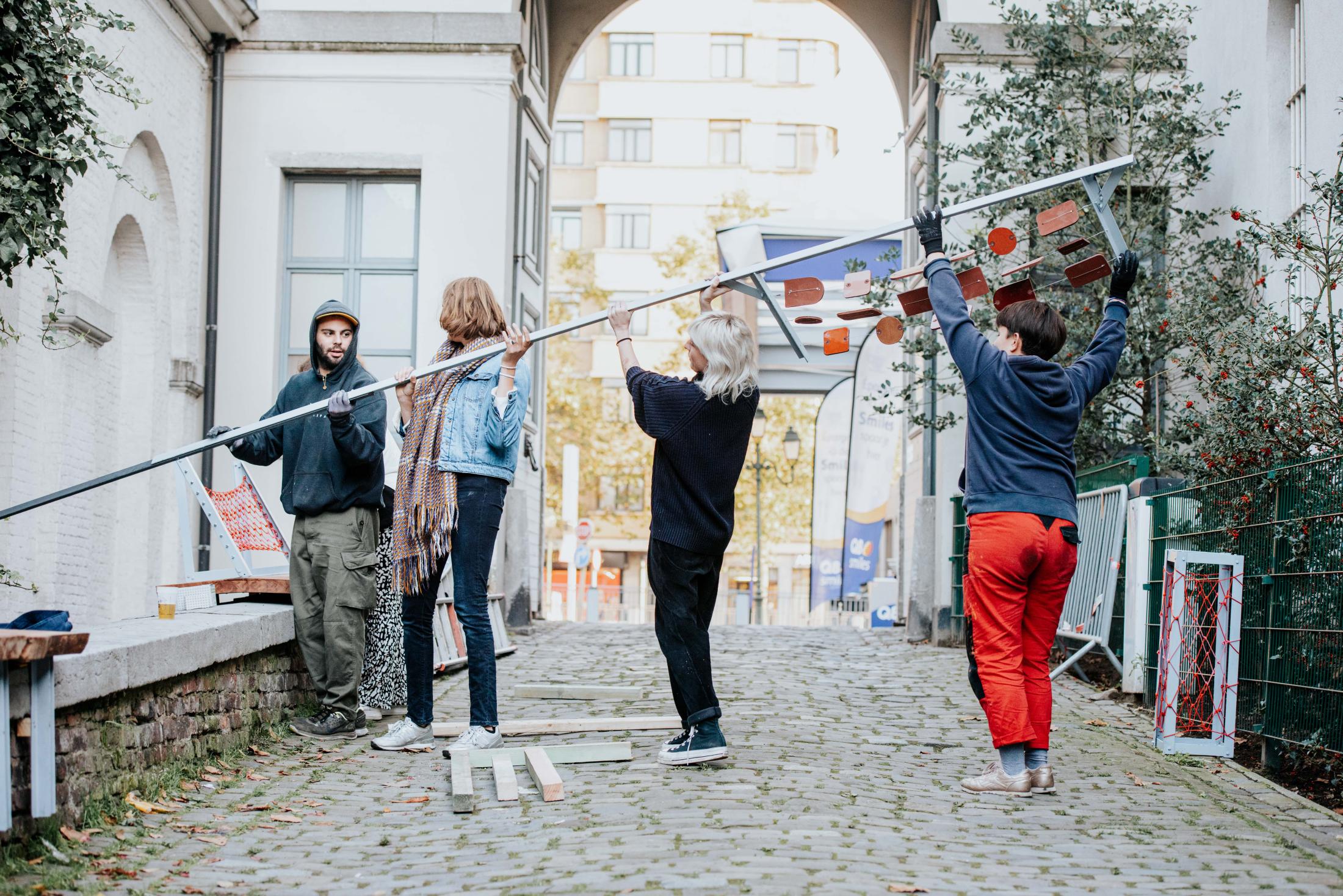
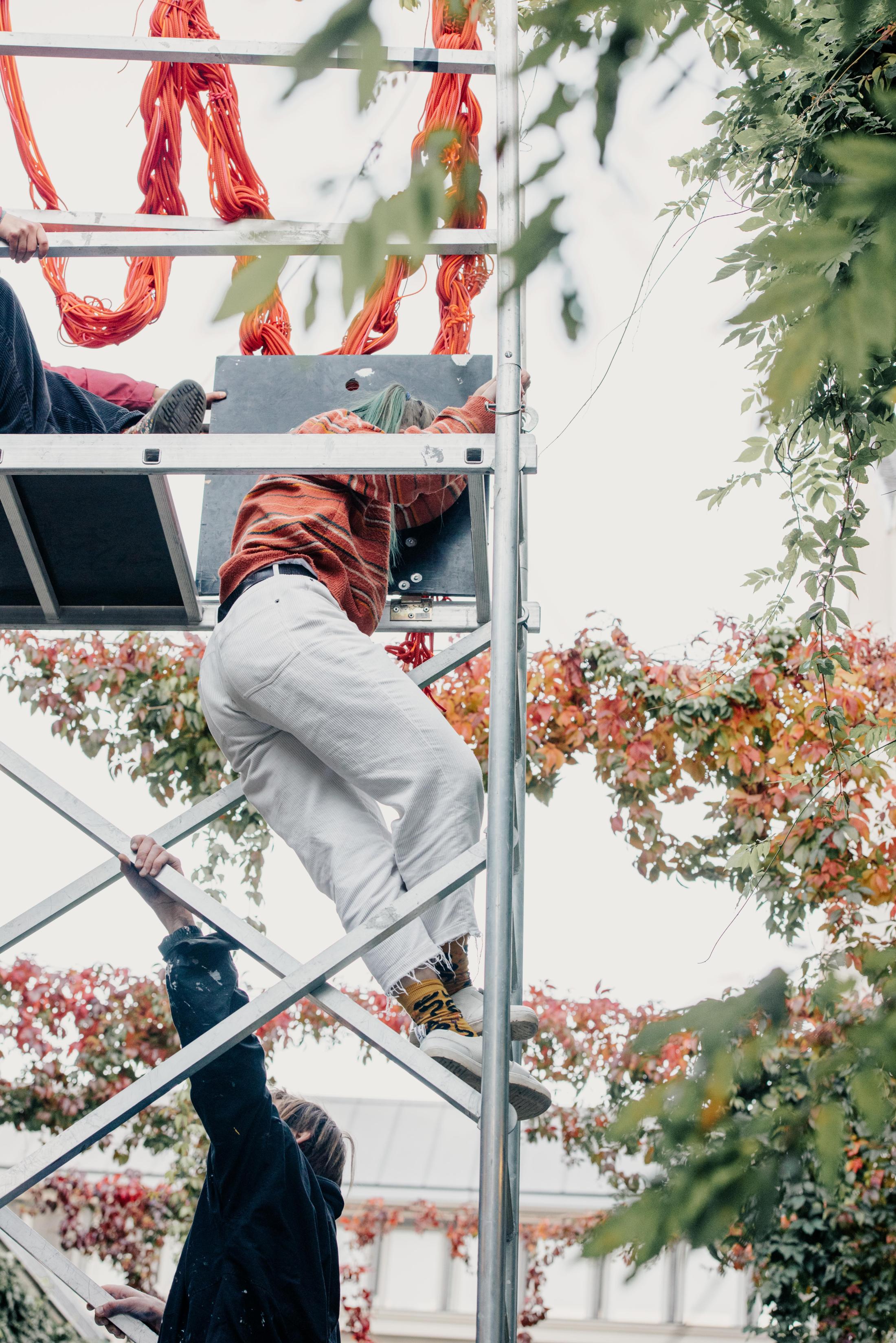
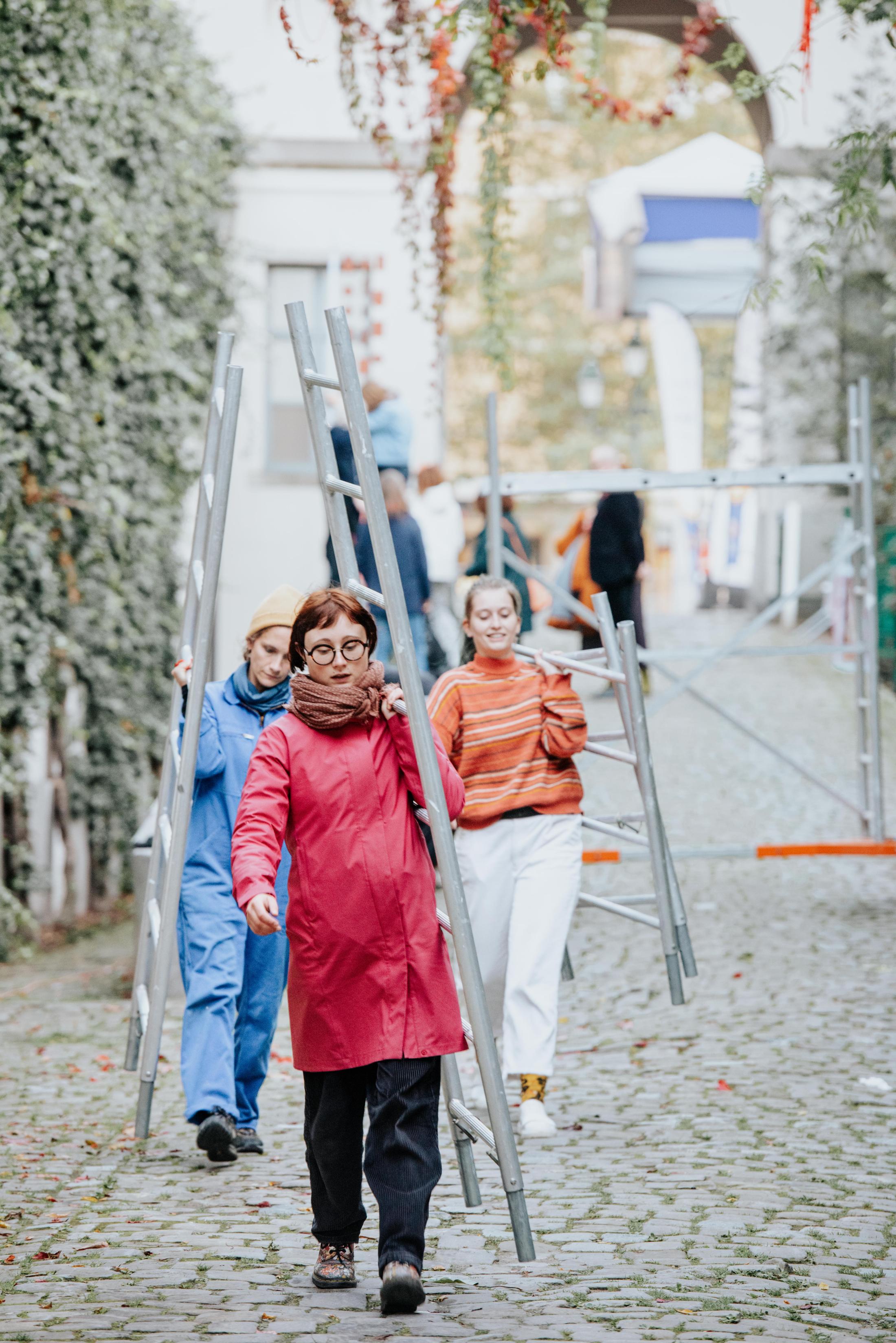
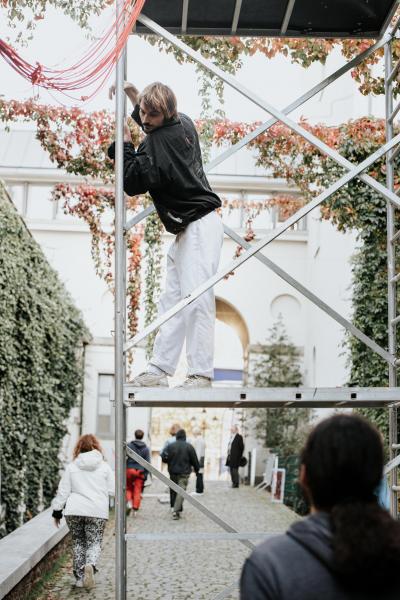
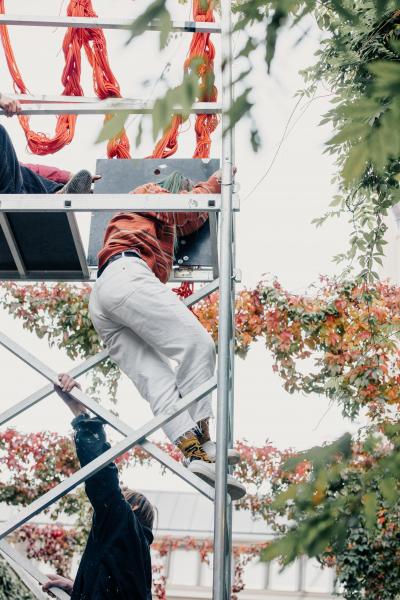
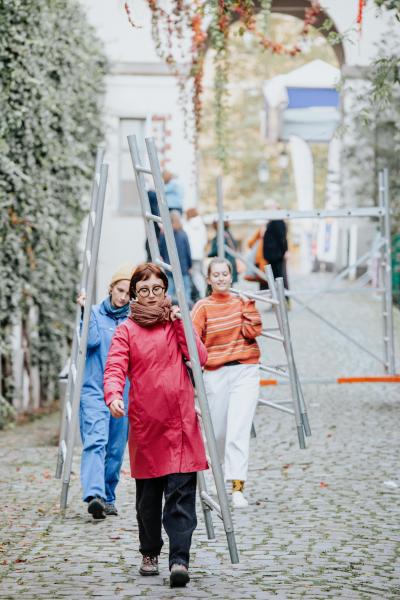
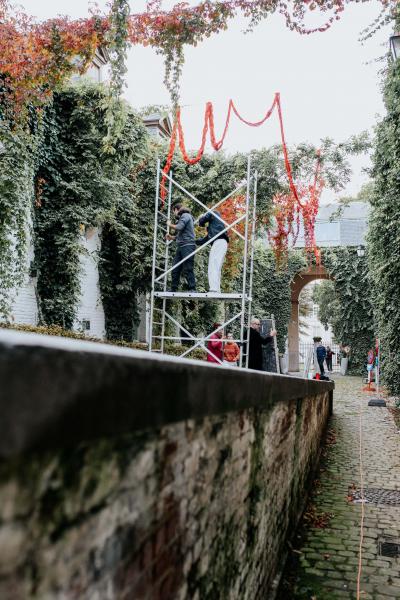
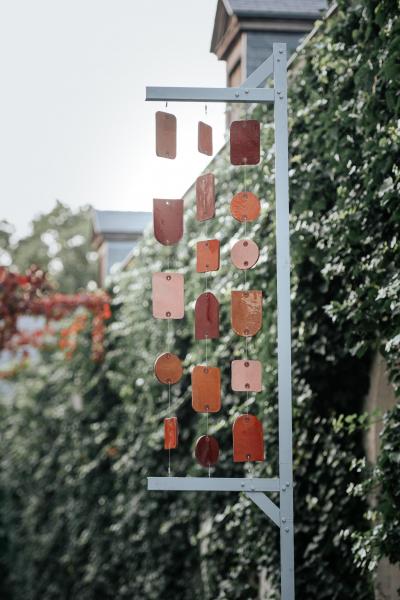
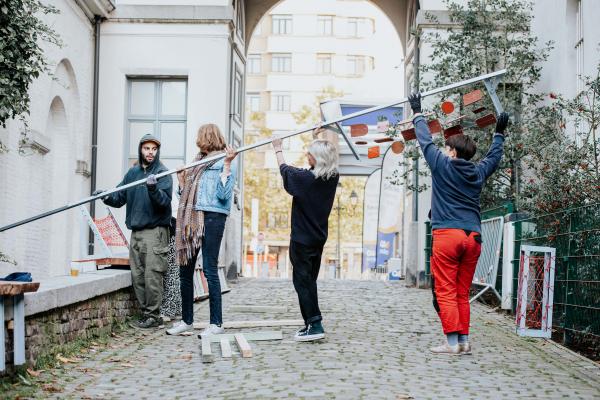
- Workshop ConstructLab – co-constructing scale 1 in situ
STUDY TRIPS
Study trips punctuate the academic year.
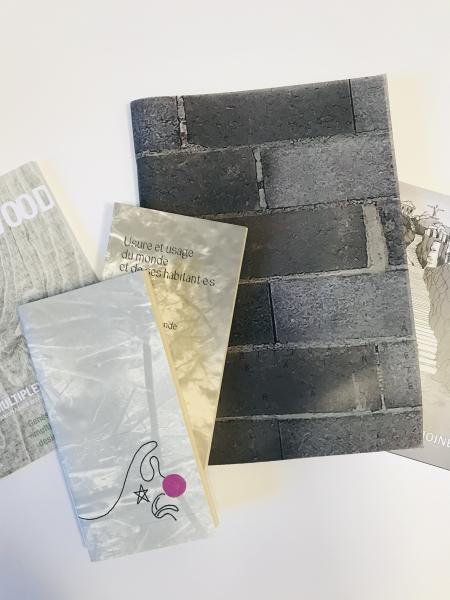
Cycles of meetings, visits to sites, projects, studios, exhibitions, diverse readings—books, places, situations—and study trips punctuate the studio experience.
ARTISTIC ELECTIVE COURSE
In the first year of the master’s, an elective artistic course complements this program to bring practices related to those developed in the studio.
In the second year, it is possible to choose to start an interdisciplinary project by taking a minor in another curriculum.
TECHNICAL COURSES
- Landscape concepts
- Current design trends
- Urbanism theory
GENERAL COURSES
- Contemporary art
- General law
- Social and professional practice
- Thesis methodology
THEORETICAL SEMINARS (ELECTIVE)
Two theoretical seminars will be chosen based on each student’s questions and research areas.
INTERNSHIPS
During the two years, two external professional internships must be completed to gain real-world professional experience.
PRE-REGISTRATION:
All admission requests are made through the admissions portal. The website will allow you to apply and submit all the documents required for your pre-registration.
Entry into the second cycle (Master’s program)
Entry into the second cycle is based on an artistic portfolio review. For selected candidates, an interview is organized and coordinated by the program director.
Professeure titulaire : Alice Finichiu
Conférencier·ère : Louise Lefebvre
Assistant·e : Cristina Braschi
Contact : situ@arba-esa.be
Each year, SITU establishes partnerships with recognized institutions and events.
For the 2025-2026 academic year, the current partnerships and projects are:
Cifas – Feral Festival,
Vaux Hall Summer Festival,
KapLAB project – in collaboration with Alive Architecture, SoHab, and Degré47 – a project within the framework of the De Mot-Couvreur School Contract, supported by Perspective Brussels and the City of Brussels.
Vous souhaitez travailler avec nous ? Contactez-nous via mail à situ@arba-esa.be