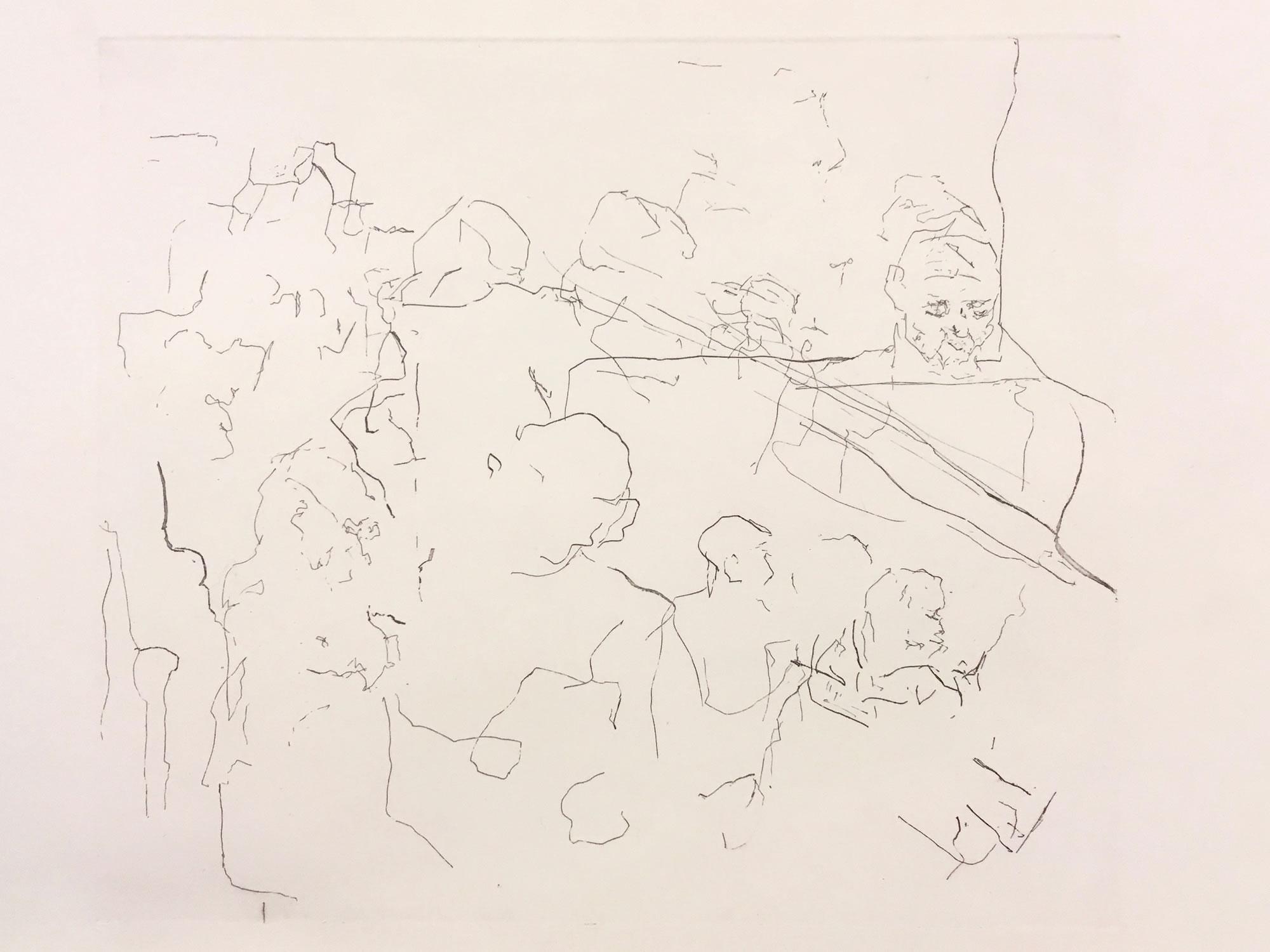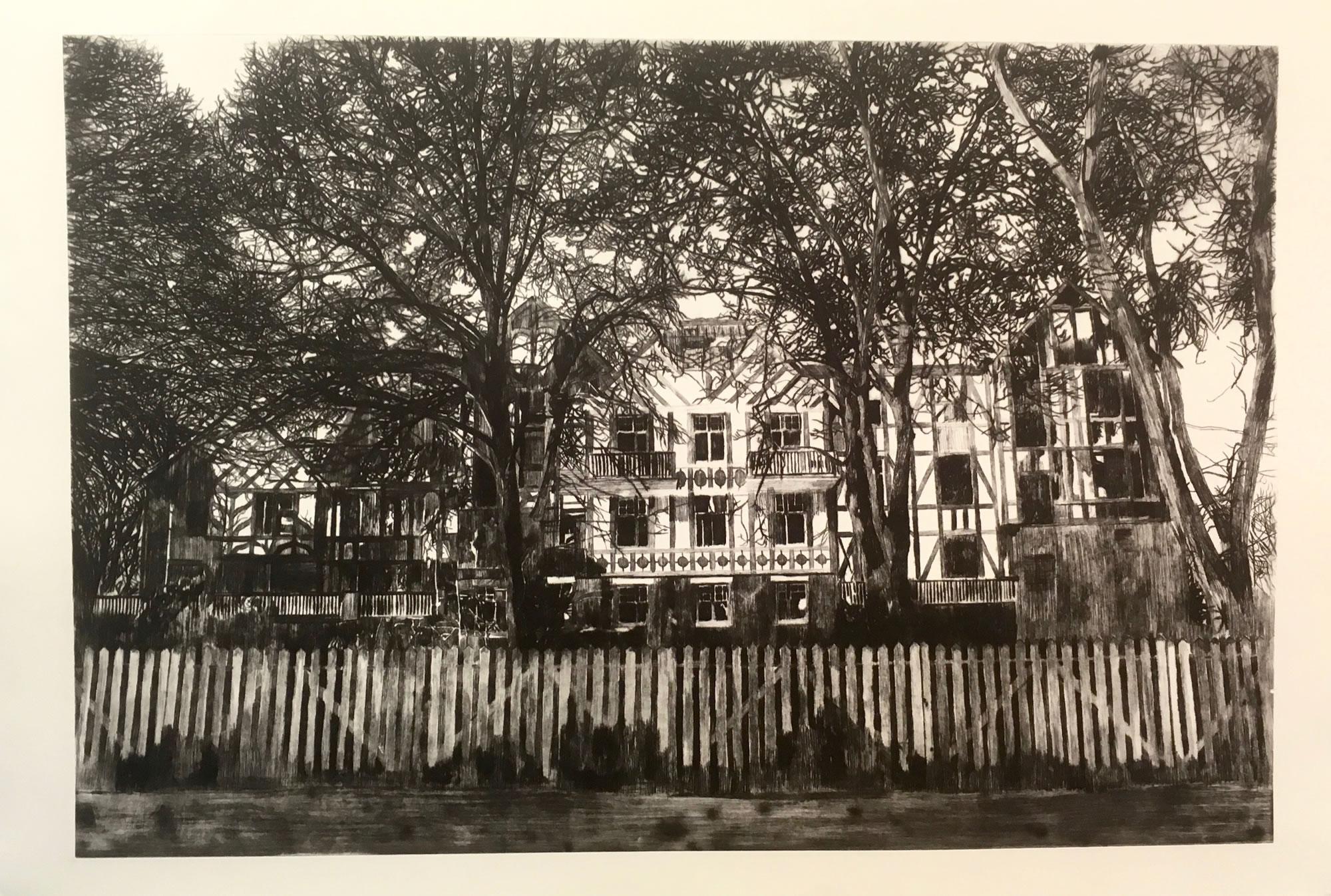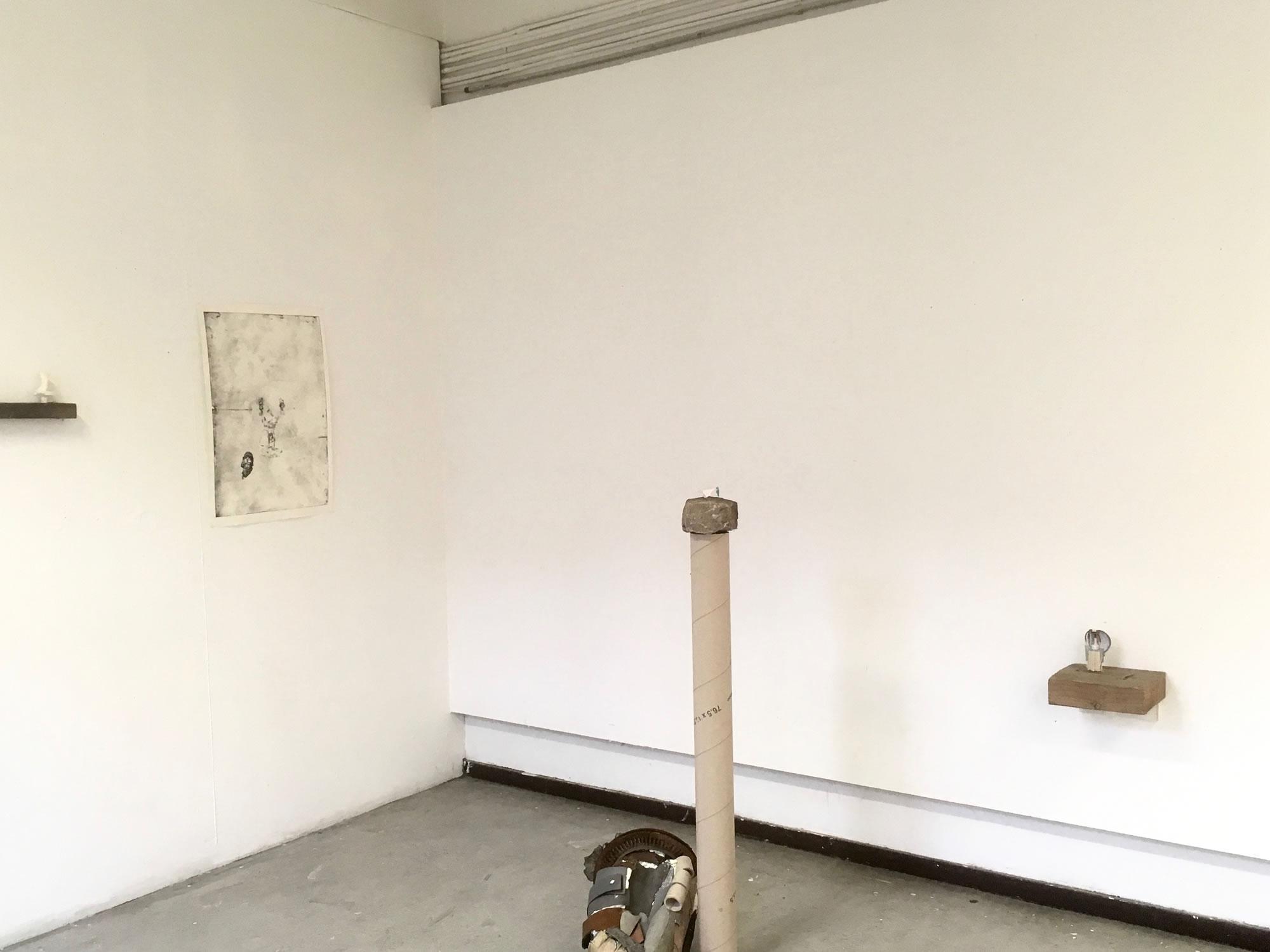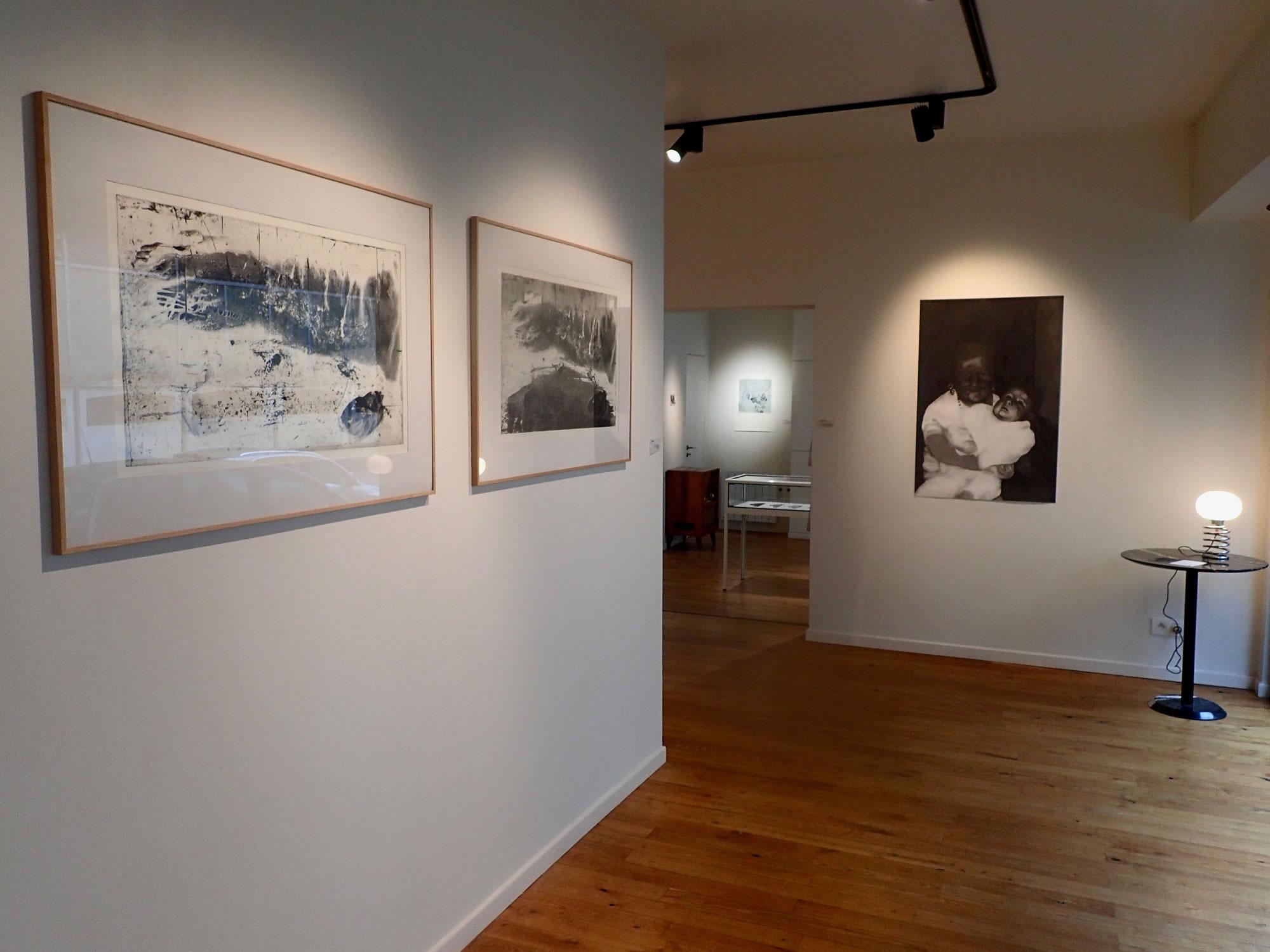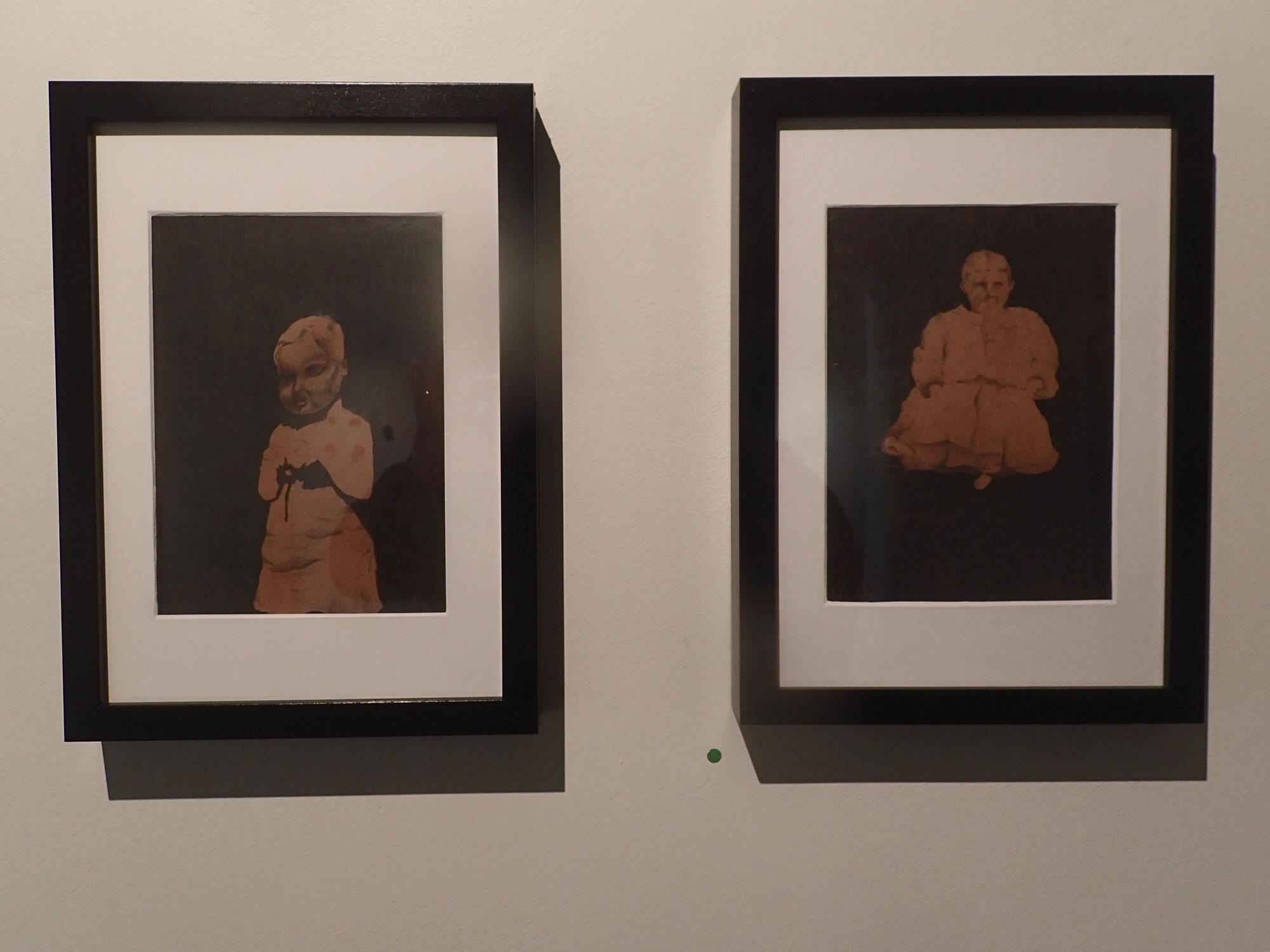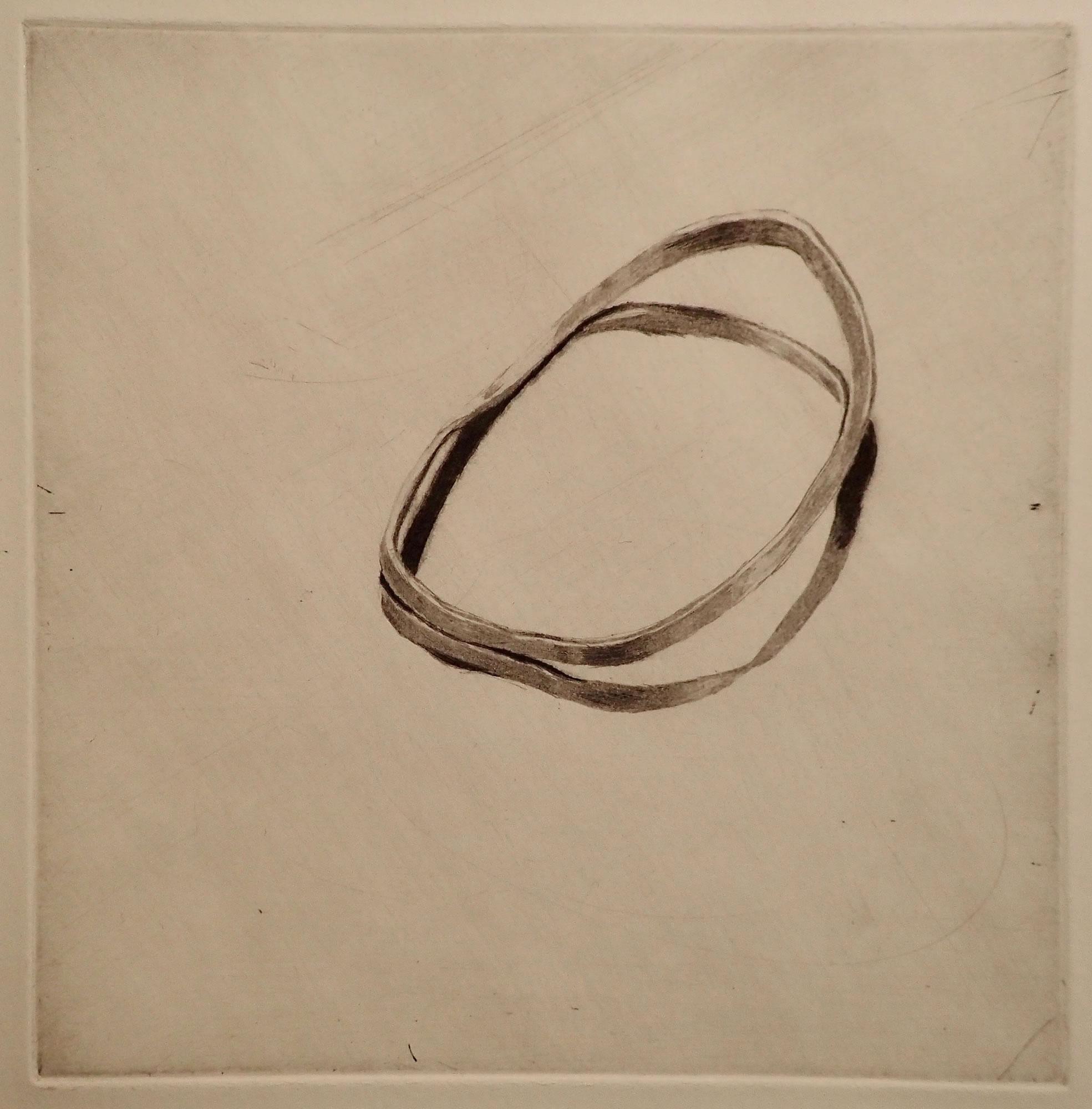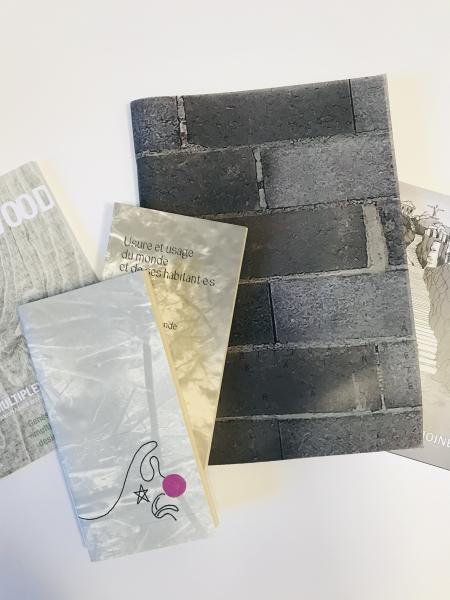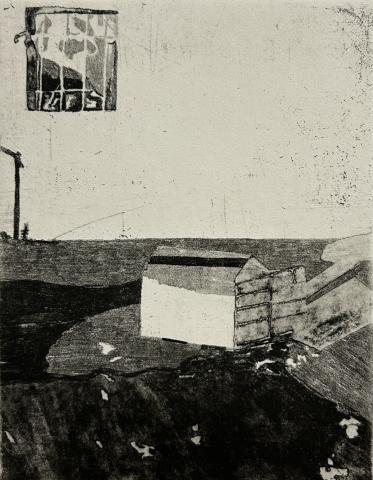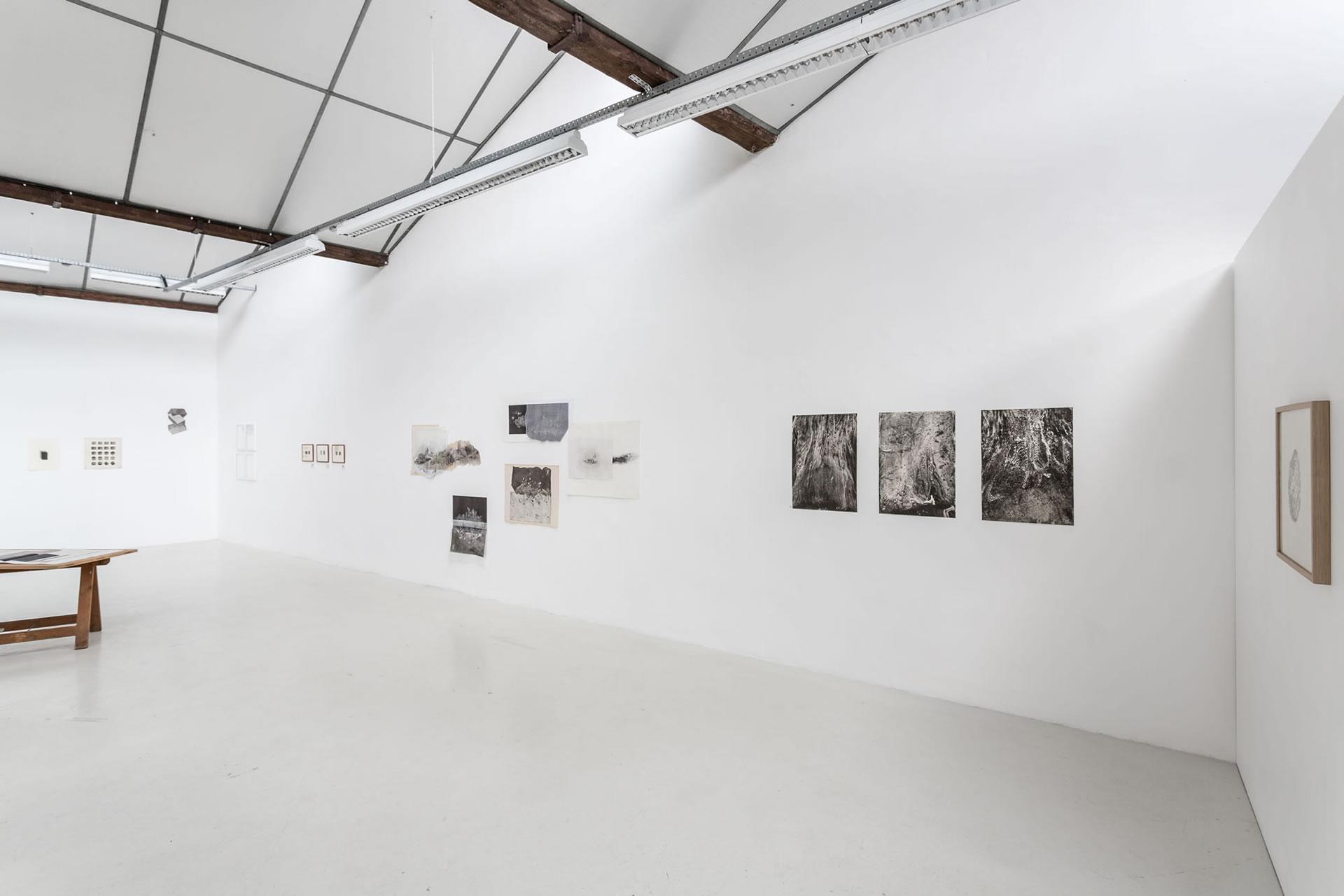
Printmaking
Within the time and space made available to them, the student will strive, with rigor, to articulate their own proposals through their work.
Starting an artistic program is embarking on a process that aims to address a series of questions and doubts about one’s place in the world, in society, and particularly within the field of the arts.
Within the time and space made available to them, the student will strive, with rigor, to formulate their own proposals through their work.
The curriculum’s pedagogy is built around respecting each student’s potential, supporting them on a path where their concerns are at the heart of their work.
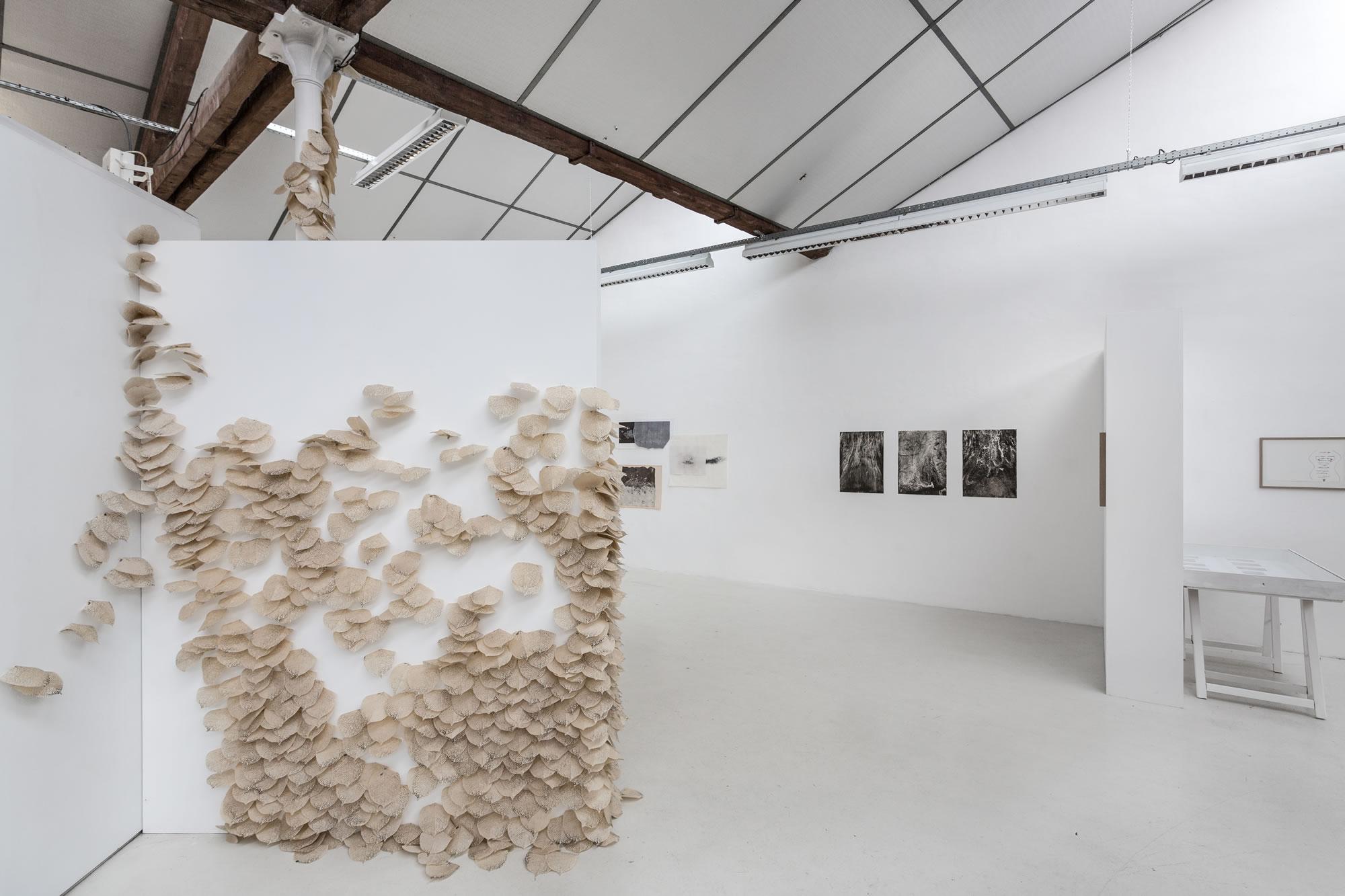
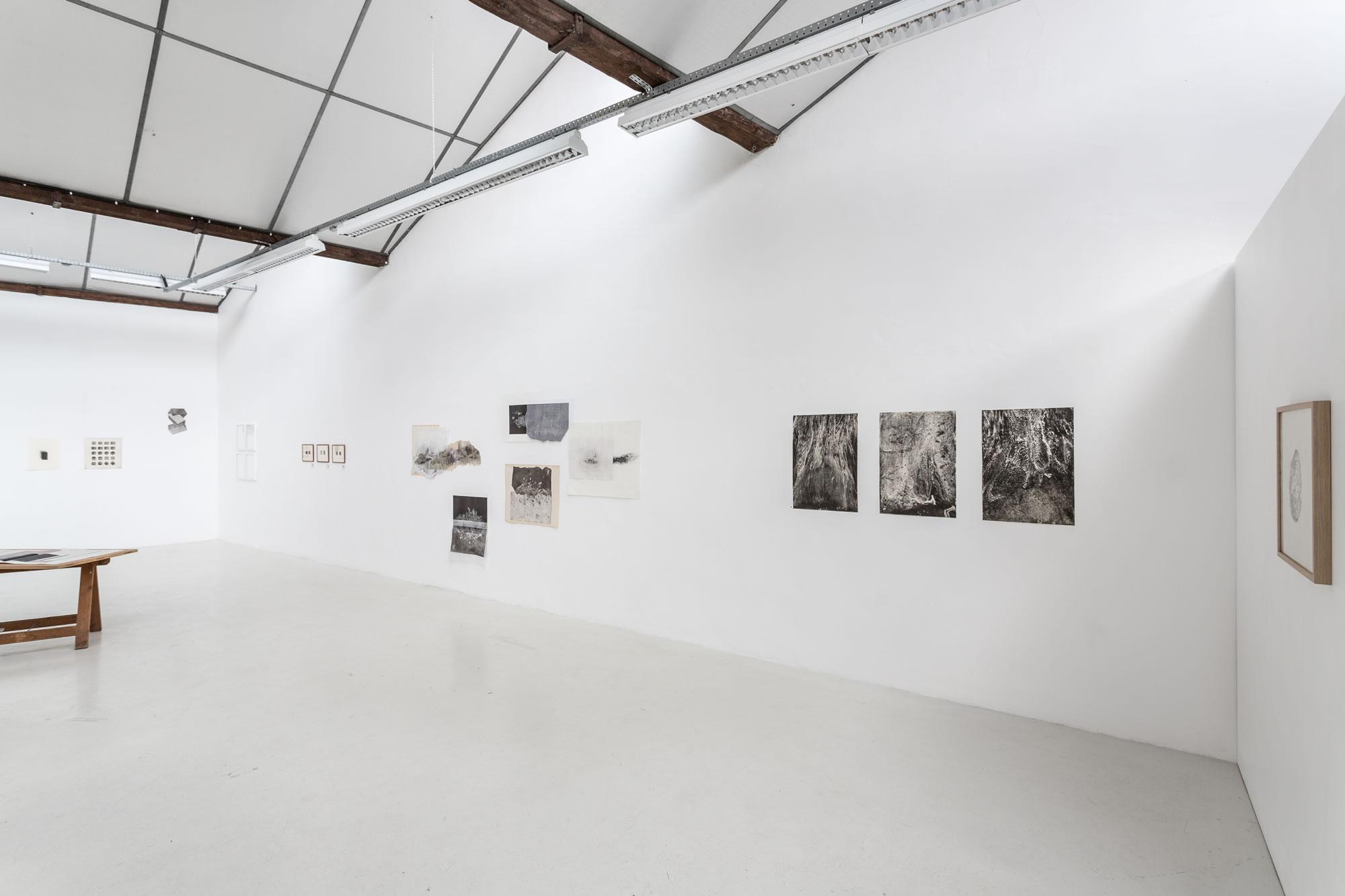
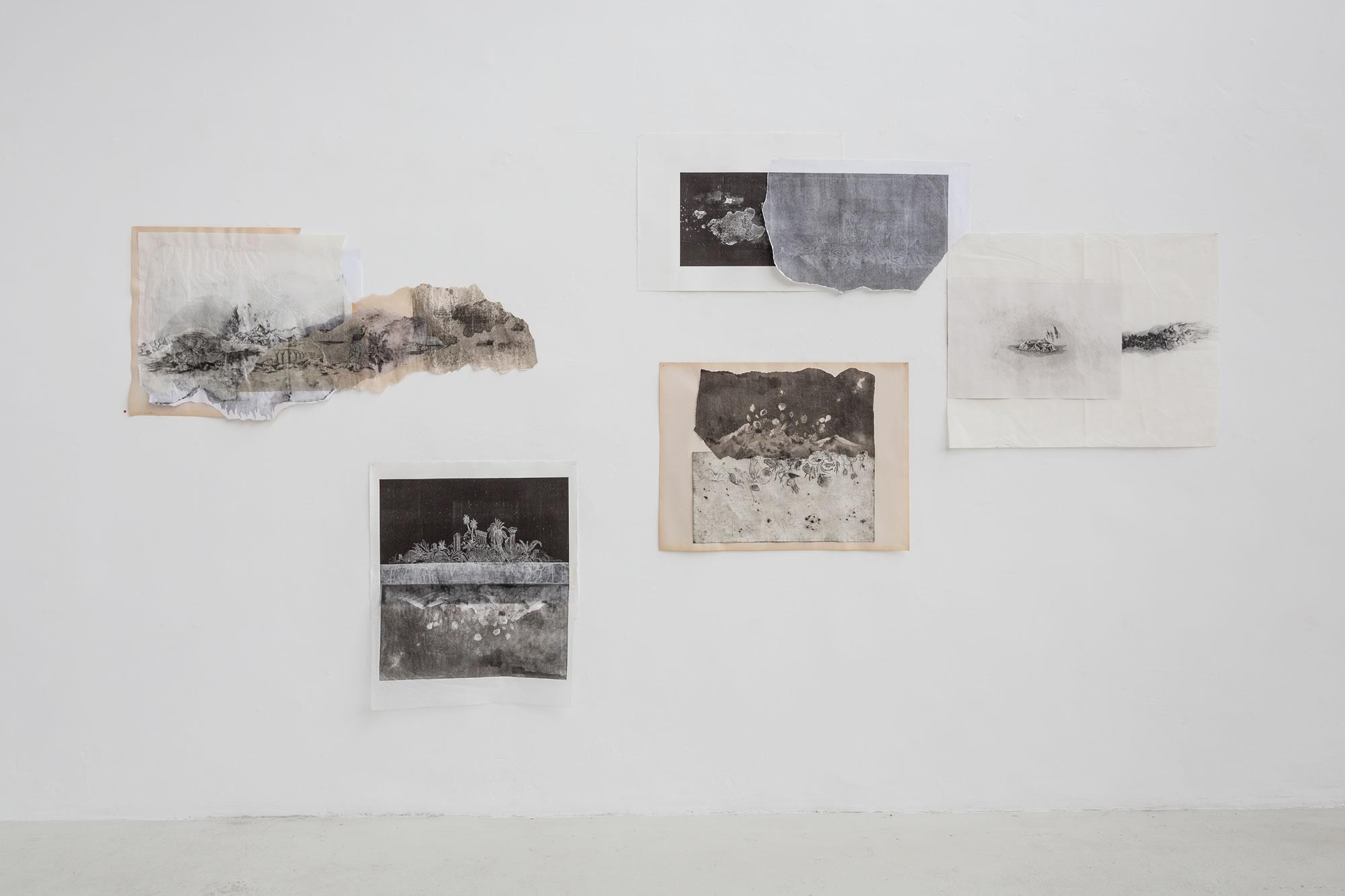
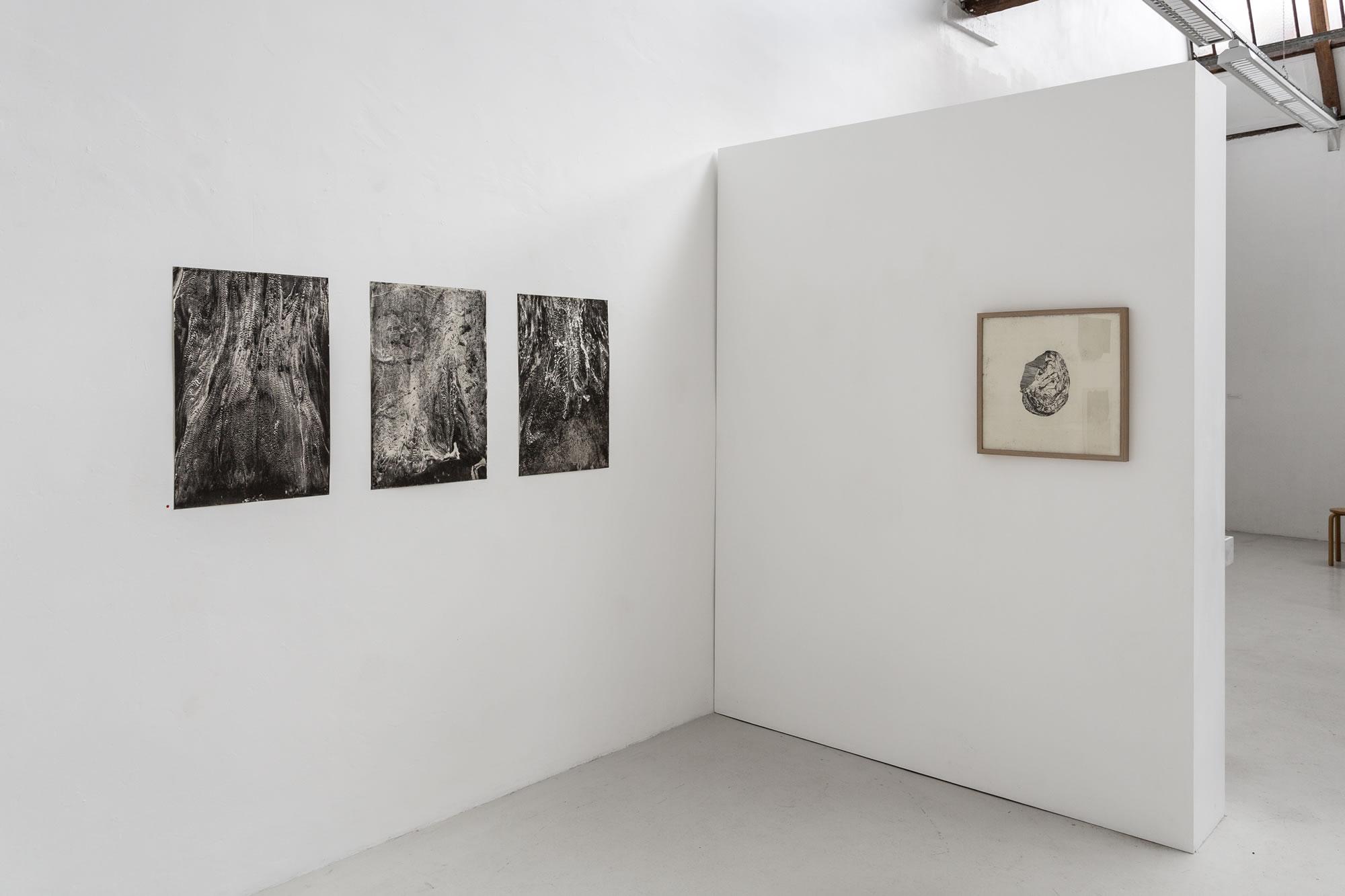
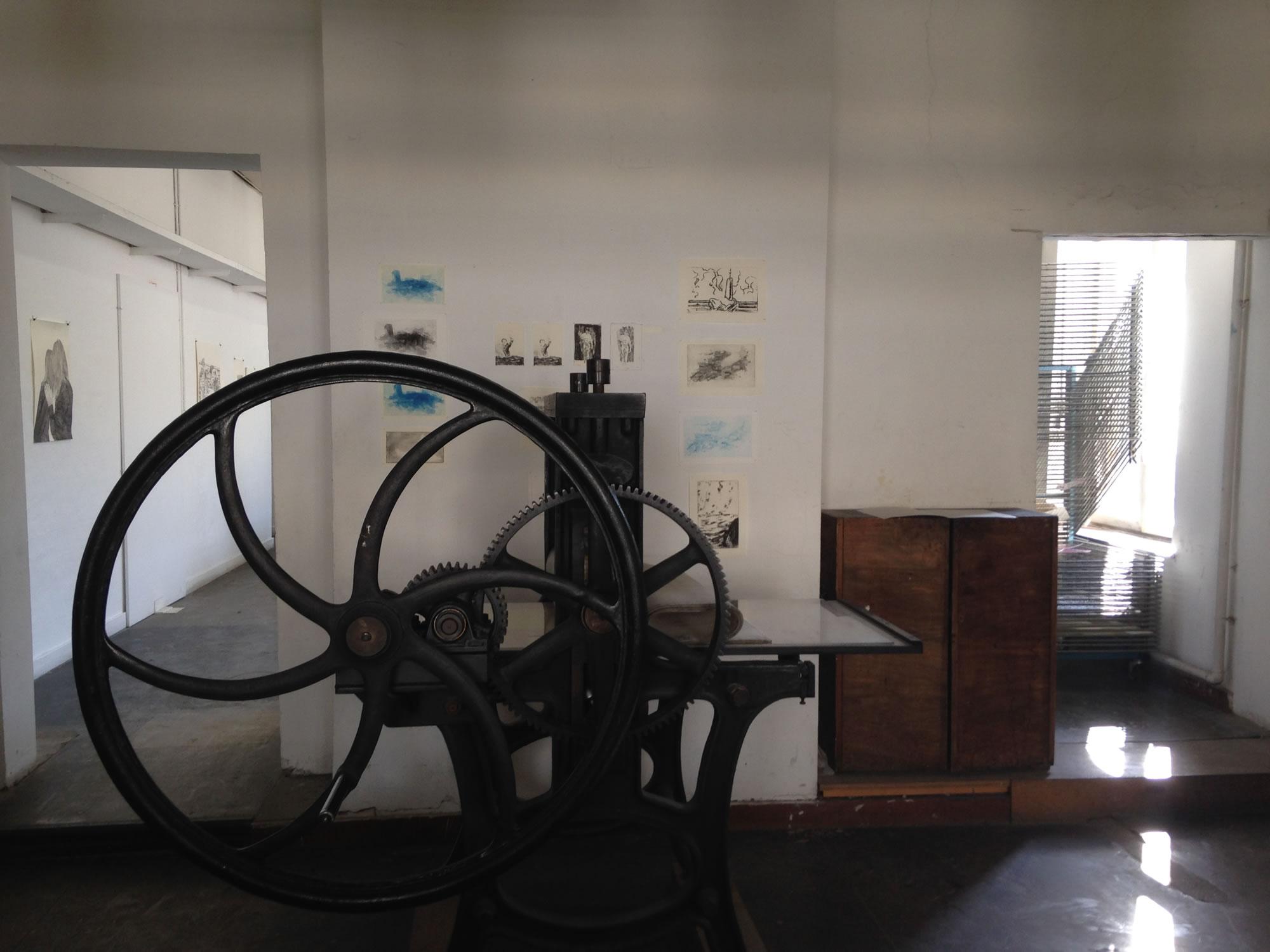
The technical necessities inherent to the practice of printmaking establish the workshop as a catalyst for research and production.
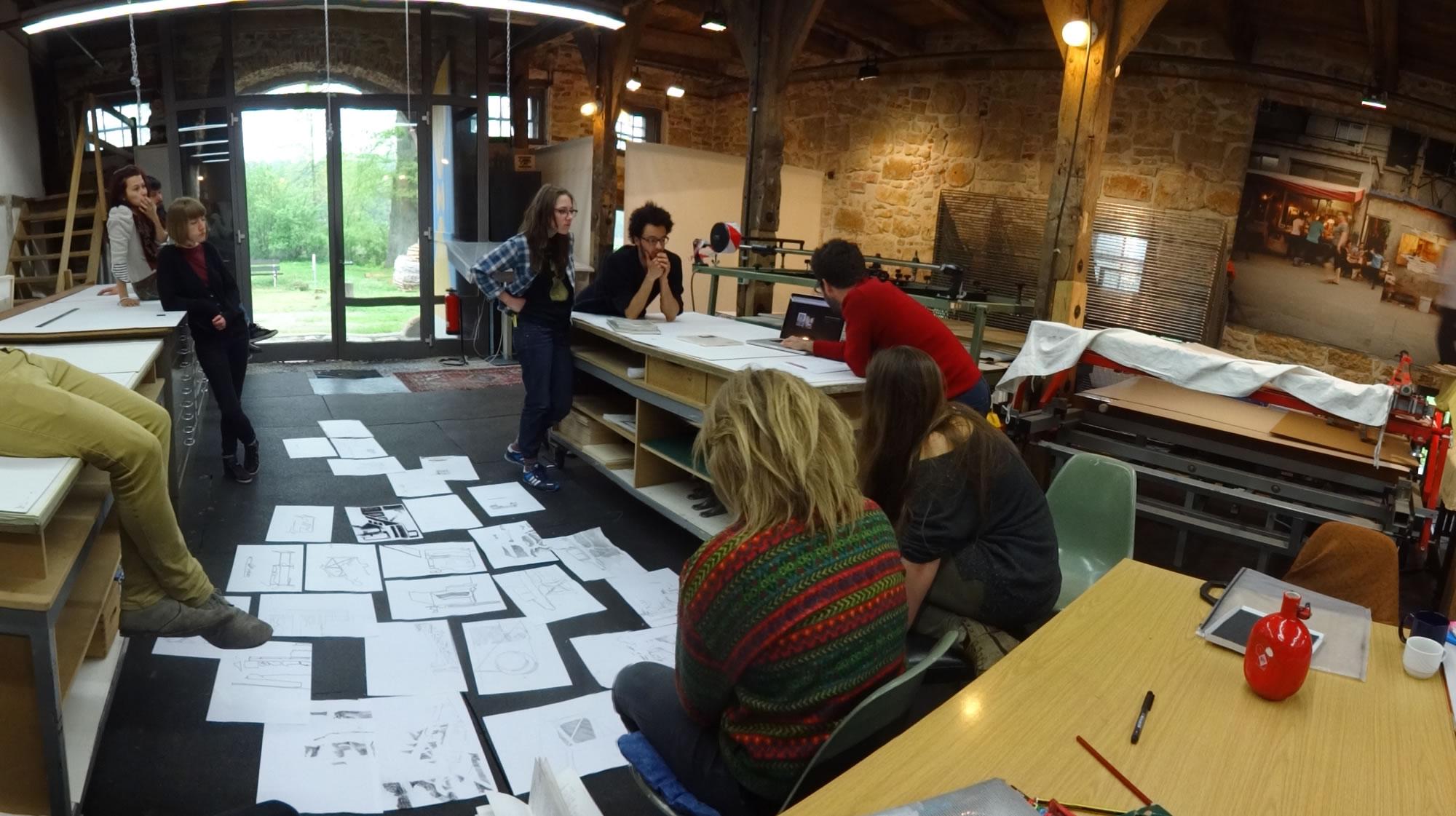
The student becomes aware of this collective dimension of the workshop and presents their projects—through both visual and verbal language—to teachers, peers, and other participants who are also part of a training program designed to evolve.
Debates, research, experimentation, discoveries, and new perspectives sharpen critical insight and enrich thinking, thus making each person’s contribution beneficial to all.
PRACTICING THE MEDIUM AS AN ARTISTIC LEVER
Learning printmaking requires a research methodology that is both practical and theoretical, structuring the creative approach and opening the way to intellectual development.
The proven richness of traditional techniques will contribute to an artistic positioning. This technical heritage clarifies a commitment that will be situated in the present through the singularity of its approach.
As their journey progresses, the student will expand their projects through conscious use of any means that serve their thought.
The printmaking training thus gradually transcends its terminology to become universal, reaching a broader field of investigation in resonance with its time.
Bachelor’s Degree – 180 credits – 1st Cycle
The educational objective at the Bachelor level is to acquire plastic means related to printmaking, opening up to the printed image, and to guide students toward both technical and creative autonomy within a contemporary artistic practice.
Emphasis is placed on the complete creative process. The student is encouraged to gather as many sources of personal inspiration as possible. They thus develop their ability to broaden their fields of theoretical and plastic research according to their sensitivity, ambitions, and boldness.
The student refines their knowledge of the medium by engaging with it and appropriating its plastic specificities. Their project development research is therefore accompanied by a personal plastic language linked to it. The student gradually acquires autonomy by taking responsibility for their projects;
They have the tools to develop these projects theoretically and assert a personal point of view.
Master’s Degree – 120 credits – 2nd Cycle
The Master’s program is a period of culmination and confirmation between the Bachelor’s achievements and the professional world.
During the first year, the student, having become aware of their means of expression, searches, dares, experiments, and aspires to surpass themselves with the same level of rigor regarding the quality of their work.
They refine their ideas and sharpen a critical eye toward themselves and the world around them.
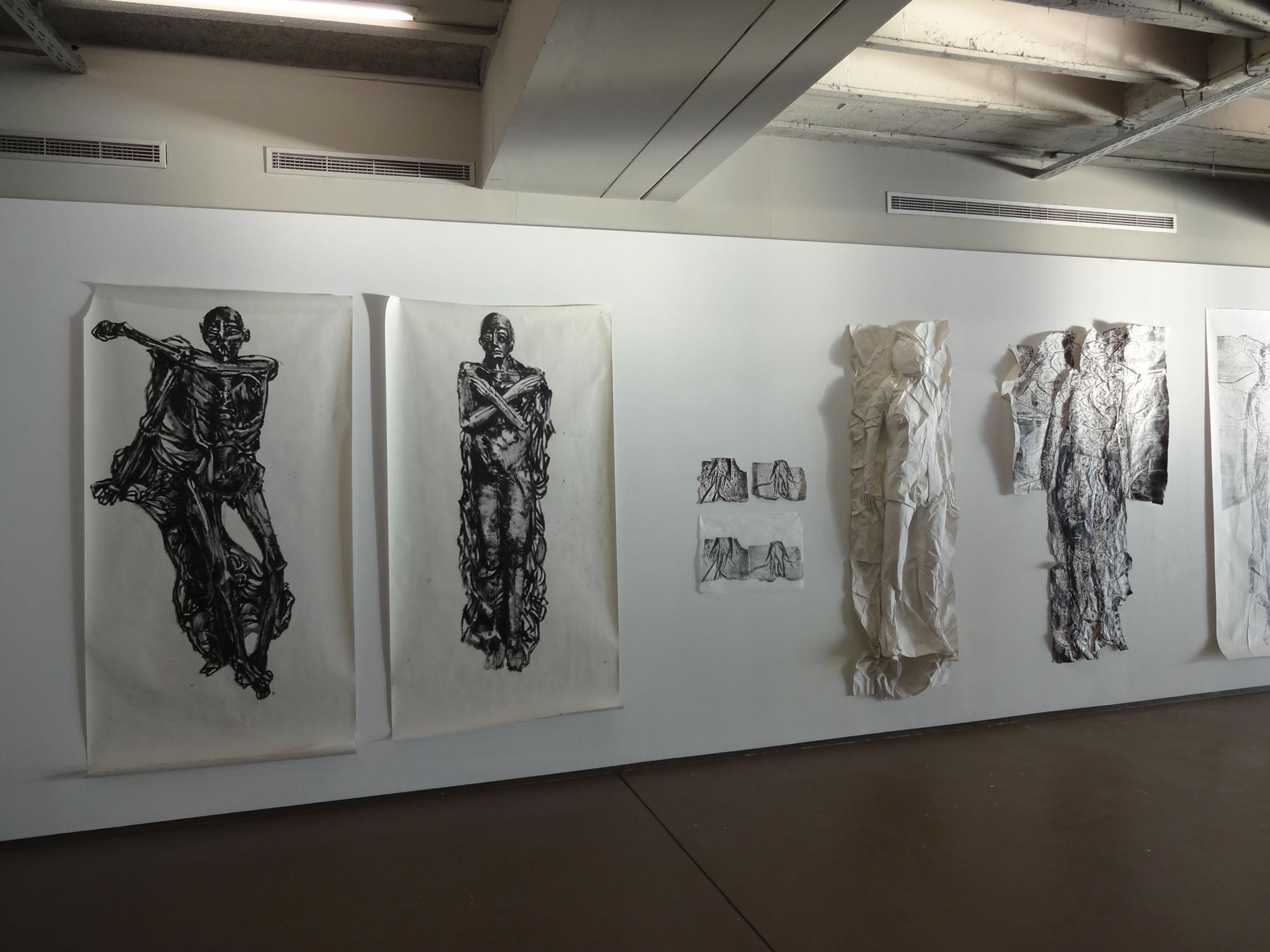
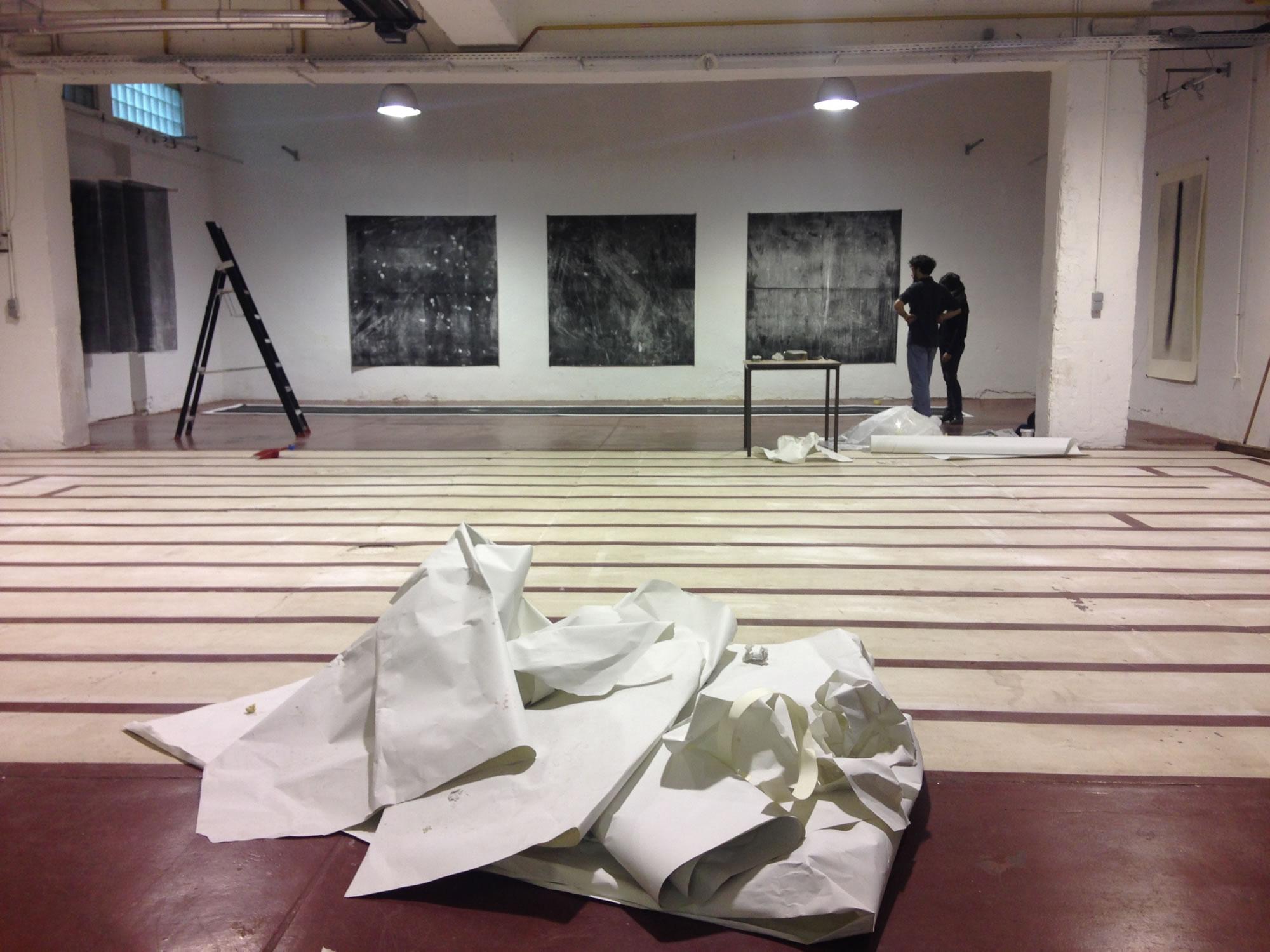
They deepen and develop an innovative artistic approach by deploying a unique language. The student also realizes an appropriate proposal between their work and its spatial presentation.
In the second year, the student asserts a concrete personal approach, masters their means of expression, and knows how to present their project. They prepare pragmatically for entry into an active artistic life and face professional networks. They possess communication tools (printed and/or virtual portfolio) and develop a strategy that balances artistic production with the need to generate a realistic economy.
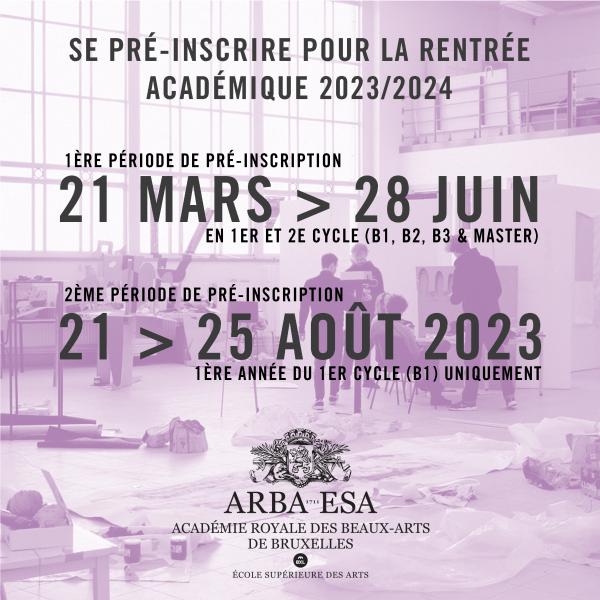
PRE-REGISTRATION:
All admission applications must be submitted via the admissions portal. The website allows you to apply and upload all the necessary documents for your pre-registration.
Entry into the First Year of the First Cycle (B1)
Admission into the first year of the Bachelor's program is subject to passing an entrance examination.
The exam consists of three parts: a practical test, a research-based test, and a motivation interview during which the candidate may present a portfolio of works.
The exam is open to all applicants; no prior artistic training is required.
Entry During the Bachelor’s Program (B2 and B3)
Admission into the second or third year of the Bachelor's program at ArBA-EsA is based on an artistic portfolio.
For selected candidates, an interview and/or practical test is organized and coordinated directly by the program coordinator.
Entry into the Second Cycle (Master's Program)
Admission into the Master's program is based on an artistic portfolio.
For selected candidates, an interview is organized and coordinated by the program coordinator.
Professeur titulaire : Thomas Amerlynck
Professeur.e : Océane Vallot
Assistant : Lucas Roman
Contact : gravure@arba-esa.be